An embroidered hoodie should feel like something the team would choose to wear, not just another piece of company apparel. It needs to be comfortable, keep its shape, hold the stitching cleanly, and make sense for the kind of work people do every day. Two styles can seem almost identical online and turn out very differently once they are embroidered. One may hold a small chest logo beautifully, while another may pull, ripple, or feel stiff around the design.
At Sew NC, we treat the hoodie and the embroidery as part of the same decision. The strongest results begin before thread colors or stitch files enter the conversation. We first consider who will wear the garment, where it will be used, how often it will be washed, and how prominent the branding needs to be.
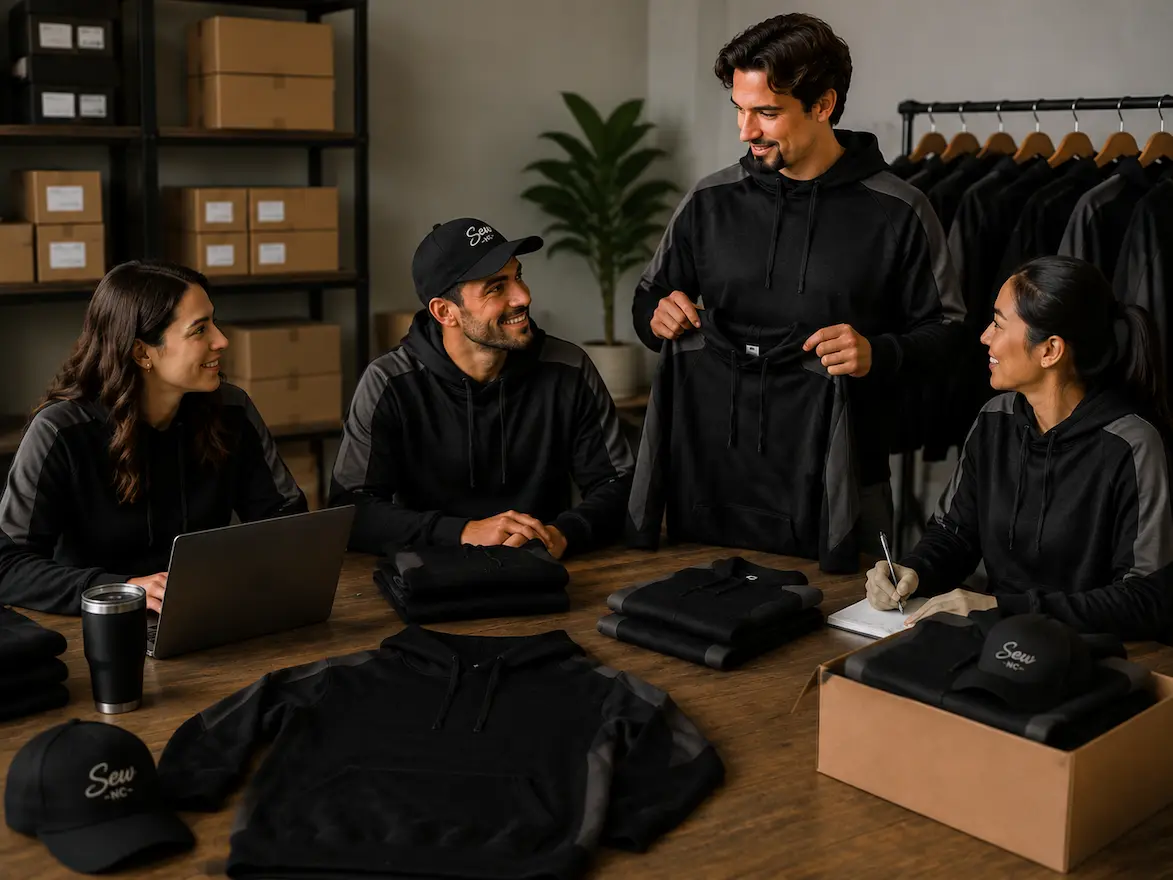
A field crew may need warmth, durability, and enough room for layering. Front-desk staff may prefer a cleaner shape with understated left-chest embroidery. A marketing team preparing for a conference may care more about color consistency, fit, and how the apparel looks in photos. The right hoodie depends on the work it needs to do.
Start With How the Team Will Actually Wear It
Color can wait. The first thing to understand is how the hoodie will fit into the workday. An embroidered hoodie worn during cold morning deliveries has to solve a different problem from one used in a reception area, office, or client meeting.
Employees doing physical work need room through the shoulders, sleeves that move comfortably, cuffs that hold their shape, and fleece that can handle regular wear. Teams layering over polos or work shirts may need a more relaxed cut. Customer-facing staff usually benefit from a smoother finish, a cleaner fit, and branding that looks intentional rather than oversized.
Wear frequency changes the decision just as much as the setting. A hoodie used once for a retreat can afford to be more style-driven. One worn every week needs stronger ribbing, better shape retention, dependable color, and fabric that can go through repeated washing without looking tired.
The same style will not suit every employee equally. A single unisex option may make ordering easier, but it can create unnecessary fit issues across different body types and job roles. Coordinated styles in matching colors and similar fabric weights often give the team a more polished look while making the garments far more likely to be worn.
Choose a Fabric That Can Support Embroidery hoodies
Embroidery adds concentrated thread and stitch tension to the garment. A stable sweatshirt fabric generally provides a more dependable base than a very thin, loose, or highly elastic knit. That does not mean every embroidered hoodie must be heavy, but the material needs enough structure to support the chosen design.
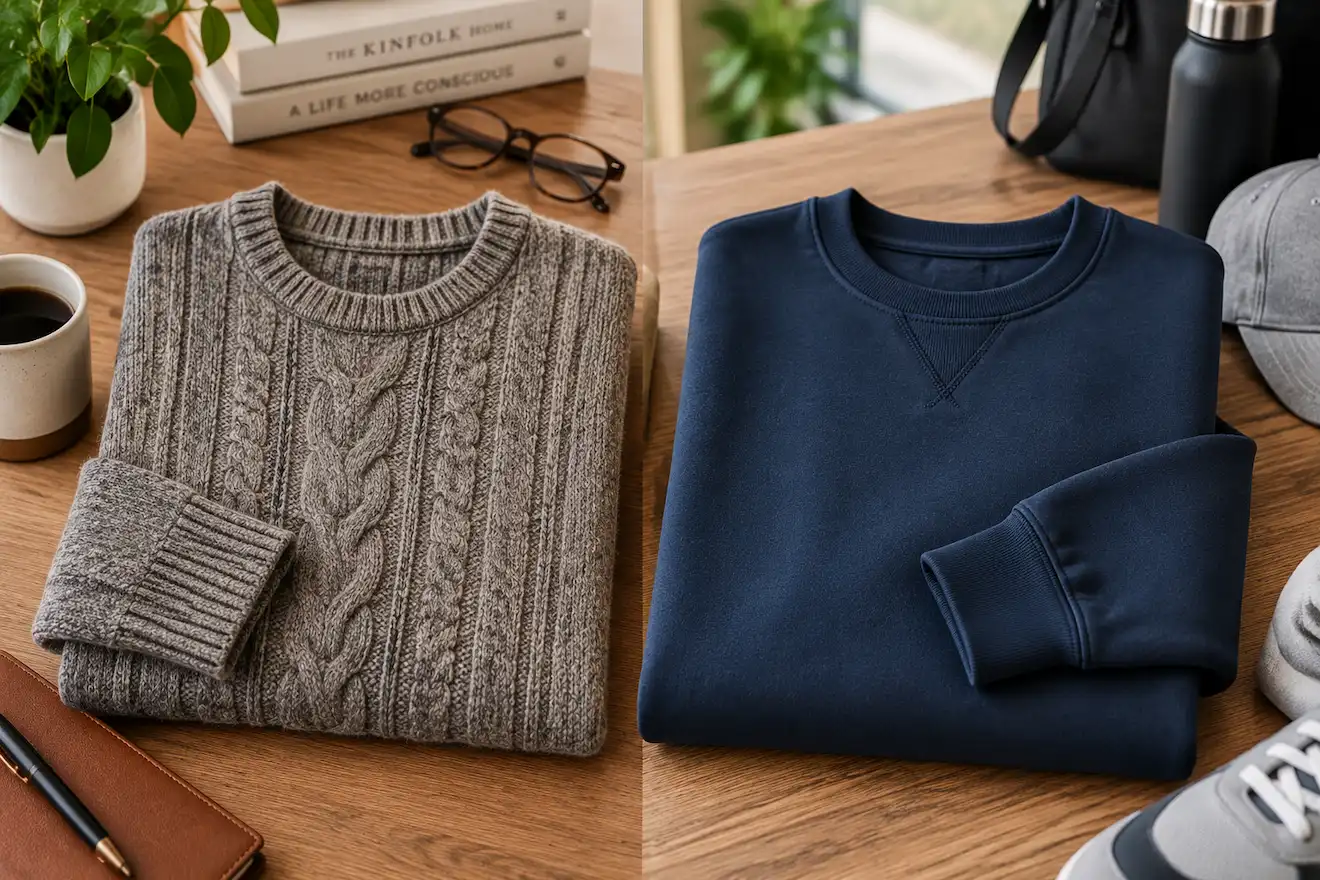
Fleece weight affects warmth, drape, and how substantial the finished piece feels. Midweight hoodies often offer a useful balance for indoor and outdoor business use. Heavier fleece can feel more premium and handle cold conditions well, though it may be too warm for active employees or mild climates.
The face of the fabric matters too. A smooth exterior usually allows small lettering and clean logo edges to remain more distinct. Highly textured surfaces can visually compete with fine details. Stretchy performance blends may work for certain designs, but they require careful stabilization and artwork planning to control distortion.
Garment construction should be evaluated on the actual style rather than broad fiber labels alone. Two cotton-polyester blends can differ considerably in thickness, surface texture, softness, shrink behavior, and shape retention. Fabric content provides context, but it does not replace reviewing the complete garment.
Pullover or Zip-Up: Which Style Makes More Sense?
A pullover gives the artwork a clean, uninterrupted front panel. That makes center-chest embroidery easier to size and position because there is no zipper cutting through the design. The result often feels warmer, more casual, and well suited to crews, school groups, events, and everyday team apparel.
A zip-up brings more flexibility to the workday. Employees can open or remove it easily as temperatures change, which makes it useful for people moving between vehicles, offices, warehouses, and outdoor spaces. Left-chest embroidery fits naturally on this style, provided the logo sits far enough from the zipper to remain balanced when the hoodie is open or closed.
Large front embroidery is harder to handle on a full zip-up. Dividing a design around the zipper can create alignment issues, while pushing the artwork too far to one side may leave the garment looking uneven. A smaller chest mark usually gives the cleaner, more professional result.
The better choice comes down to how the team will use it. A warehouse manager who adjusts layers throughout the day may prefer a zip-up. Employees working outside in colder conditions may appreciate the extra warmth of a pullover. The branding only works when the garment earns a place in the employee’s regular rotation.
Match the Logo Placement to the Business Setting
Left-chest embroidery remains a strong choice for business apparel because it keeps the branding visible without overwhelming the garment. On an embroidered hoodie, it creates a clean, professional look that works well for service crews, office staff, managers, trade teams, and employees who spend time with customers.
The design usually stays within a compact area, often around three to four inches wide on adult garments. That range is only a starting point. The logo shape, hoodie size, zipper, hood, neckline, seams, chest width, and the way the fabric falls on the body all influence the final placement.
Center-chest embroidery makes a stronger statement and gives the garment a more casual feel. It works best with bold icons, short names, team apparel, internal merchandise, and artwork meant to stand out from a distance. Detailed logos can become dense or stiff when enlarged, so size should follow clarity rather than available space.
Sleeves, cuffs, hoods, and upper backs can carry a secondary detail such as a department name, location, initials, or short message. Those areas leave less room and often include seams or thicker sections that make embroidery more demanding. When several placements are used, the main logo should stay visually dominant while the supporting details remain subtle.
Simplify the Logo Before Choosing Its Size
A logo designed for a website, vehicle wrap, or printed brochure may not translate directly into thread. An embroidered hoodie depends on stitches that have physical width, direction, density, and layering. Tiny text, narrow gaps, gradients, shadows, and highly detailed symbols may lose clarity at apparel size.
Digitization converts artwork into stitch instructions. It determines how different areas will be sewn, in what order, with which stitch types, and at what density. Enlarging the original image file does not solve an embroidery problem because image resolution and stitch structure are not the same thing.
Simplification does not mean weakening the brand. It can involve removing a tagline, increasing letter spacing, thickening delicate shapes, isolating the main icon, or creating an apparel-specific version of the mark. Many brands already use responsive logo variations for different spaces, and embroidery benefits from the same thinking.
Use Thread Contrast Without Losing Brand Consistency
Thread contrast determines whether the logo reads clearly against the hoodie. A navy design on black fabric may technically match brand colors while becoming nearly invisible in normal lighting. An embroidered hoodie needs enough separation between garment and thread to preserve recognition at a practical viewing distance.
Contrast can come from value, not only hue. A light blue thread may stand out against navy while still feeling aligned with the brand palette. White, cream, silver, or light gray can provide a clean corporate look on darker garments. Darker threads usually read more clearly on light gray, white, tan, and pastel fabrics.
Exact color matching requires realistic expectations. Embroidery thread reflects light differently from ink, vinyl, screen printing, or a digital screen. The goal is often the closest suitable thread color that keeps the logo recognizable, rather than a mathematically exact match that performs poorly on the chosen fabric.
Businesses ordering more than one garment color should review contrast for every combination. A thread palette that works on charcoal may disappear on royal blue. Maintaining the same logo structure while changing approved thread colors can protect consistency without sacrificing visibility.
Think Beyond the First Order
A successful embroidered hoodie program should be repeatable. Businesses often focus on the initial launch and discover later that new hires, damaged garments, department changes, or seasonal needs require additional units. Product availability and decoration records become important once reordering begins.
Using a stable core style can make future orders easier, especially when the business expects steady hiring. Fashion-driven colors and limited seasonal garments may work for an event or merchandise release, but they carry more risk when exact replacement apparel will be needed months later.
Size planning also deserves attention. Ordering only the sizes employees request may seem precise, yet businesses with frequent staffing changes may benefit from holding a small number of common sizes. Large speculative inventory is rarely necessary, but a modest replacement plan can prevent rushed one-off decisions.
Companies comparing styles can explore our custom apparel selection before finalizing the garment. Reviewing fit, color range, construction, branding area, and likely reorder needs together creates a stronger business decision than choosing from a product image alone.
How to Make the Final Hoodie Choice
The final decision should connect five factors: wearer, environment, garment, artwork, and ordering plan. The best embroidered hoodie is not automatically the most expensive option. It is the style that supports the logo while meeting the daily needs of the people wearing it.
Begin with the employee role and expected conditions. Narrow the options by warmth, fit, layering, zipper preference, and care requirements. Review the chosen logo at the intended size rather than judging it from a large digital file. Confirm that thread contrast works on every garment color.
The proof should be evaluated as a complete composition. Look at the relationship between the logo and the chest area, the distance from the zipper or neckline, the proportion of the design, and the legibility of small text. A technically centered logo can still appear misplaced if the garment construction changes the visual balance.
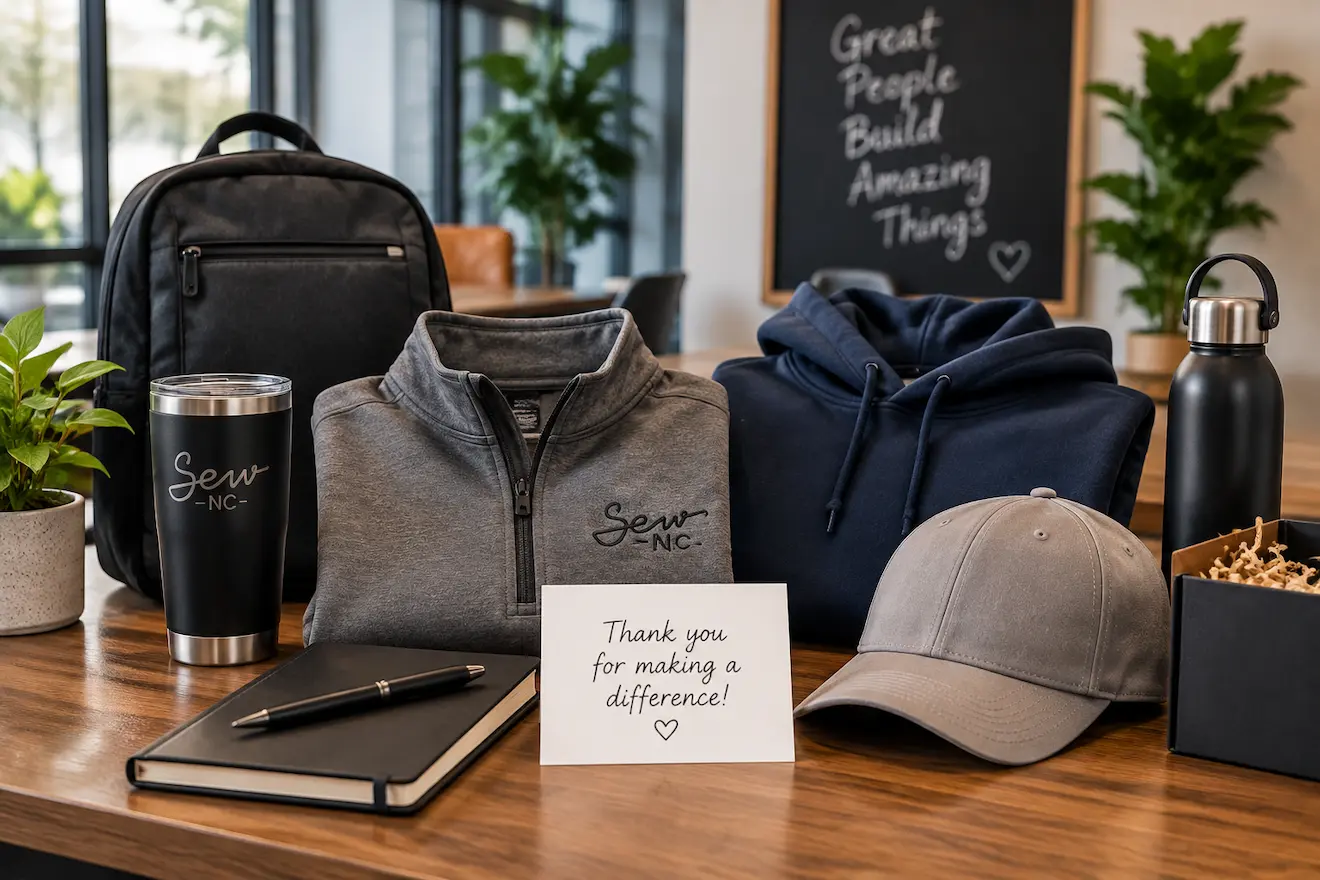
Thoughtful planning produces apparel employees are more likely to keep wearing. That continued use gives branded clothing its real value. The hoodie becomes part of the working wardrobe rather than another promotional item left in a drawer. At Sew NC, we support all the decisions that you may have and convert your ideas into a reality, you only need to contact us and start to describe what you have in mind.