Custom sweatshirts sound like a straightforward purchase until the actual decisions start piling up. Style, fabric weight, decoration method, logo placement, size distribution, production timeline. Each one affects the finished product in ways that are hard to reverse once an order is in motion. Most buyers figure this out mid-process, which is where things get expensive and frustrating.
What follows is a practical breakdown of what actually drives a good sweatshirt order, written from the perspective of people who work through these decisions with clients every week. Sew NC is the best place to start and find the best options for you and all your events, looking good from the first moment you cross the door.
Decoration Methods and When Each One Makes Sense
Not every logo belongs on every custom sweatshirt through the same process. The artwork, the quantity, the garment surface, and the intended lifespan of the apparel all push the decision in different directions. Buying on habit or price alone without thinking through the method usually produces a result that technically exists but does not hold up the way it should.
Embroidery is what you reach for when the branding needs to communicate something beyond just visibility. The dimensional quality of stitched thread on a fleece surface reads as intentional. It holds up through industrial laundering cycles, stays sharp after years of wear, and ages better than any ink-based alternative.
Screen printing is the right choice when the design covers real estate that embroidery cannot. A full front graphic, a large back design, event artwork that spans the chest of a custom hoodie; these are screen printing’s home territory. High quantities also shift the math in screen printing’s favor, since setup costs are amortized across more units and the per-piece price drops accordingly.
DTF has changed the economics of small-run decorated apparel in ways that were not possible a few years ago. Full-color artwork, photographic gradients, and intricate detail are all within range because there are no screens to separate and no minimum color charges. On sweatshirt fleece, DTF produces a slightly different hand feel than it does on a smooth jersey knit, and the surface texture of heavier fleece can affect how fine detail reads.
What Buyers Should Know Before Ordering Embroidered Sweatshirts
Embroidered custom sweatshirts in a well-produced run look like a product. A poorly produced one looks like an attempt. The difference usually traces back to decisions made before the first stitch is placed, specifically around digitizing, thread matching, and placement consistency. Digitizing is the process of translating a logo file into a stitch map that an embroidery machine can read. It is not a conversion. It is an interpretation.
A logo built for print has color blends, thin strokes, and sometimes very small text that simply does not exist in thread form at chest-logo scale. A skilled digitizer solves those problems by simplifying where necessary, adjusting stitch angles to read the logo correctly at small sizes, and building a file that produces a consistent result across hundreds of pieces.
Thread color matching works off Pantone references, but the sheen and physical texture of thread shifts how a color reads compared to ink on paper or a color code on a screen. A color that looks bright in a swatch can read as muddy on a dark fleece background.
Placement consistency is something that matters at scale in ways it does not matter on a single piece. On a run of three hundred embroidered sweatshirts, a hooping setup that drifts by half an inch between pieces creates visible inconsistency when the garments are stacked and compared. This is a production quality detail, not an artwork detail, and it is part of what separates a commercial embroidery operation from a lower-volume setup.
Custom Hoodies for Teams, Schools, and Organizational Programs
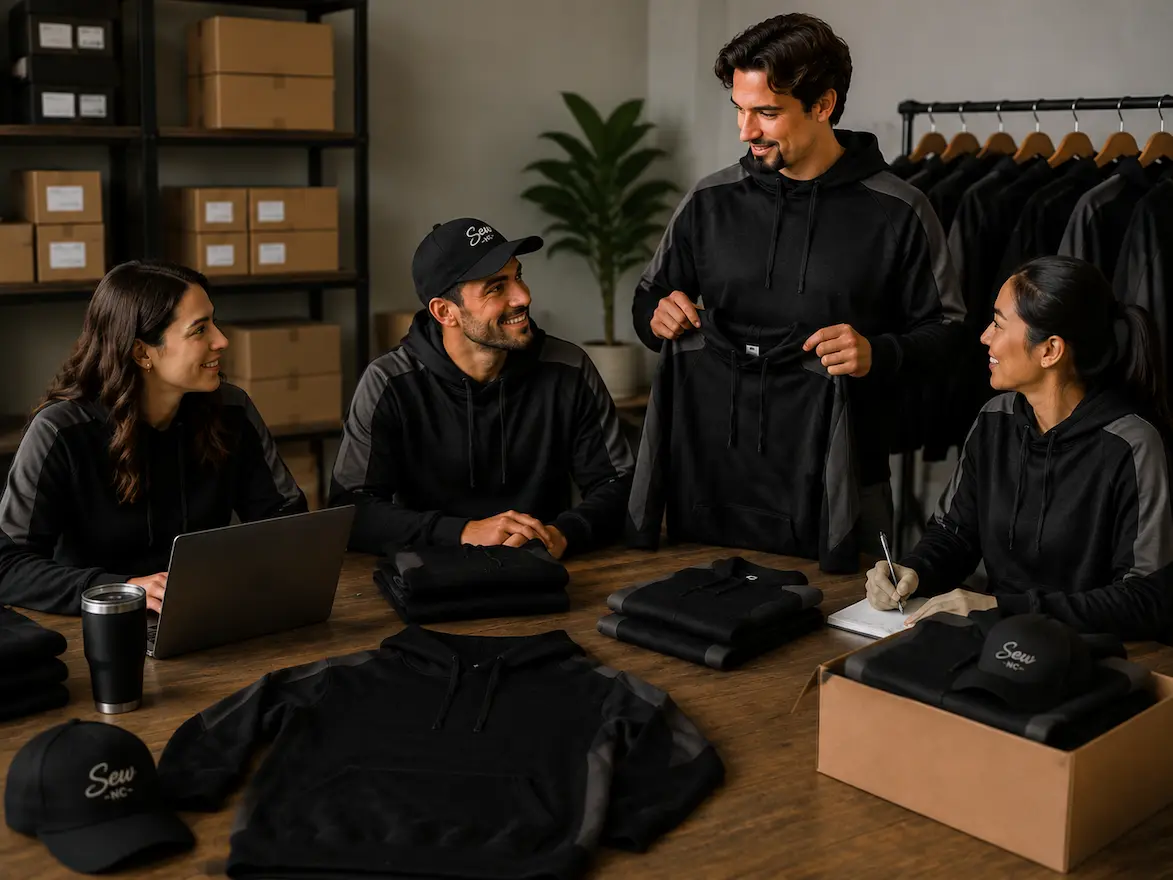
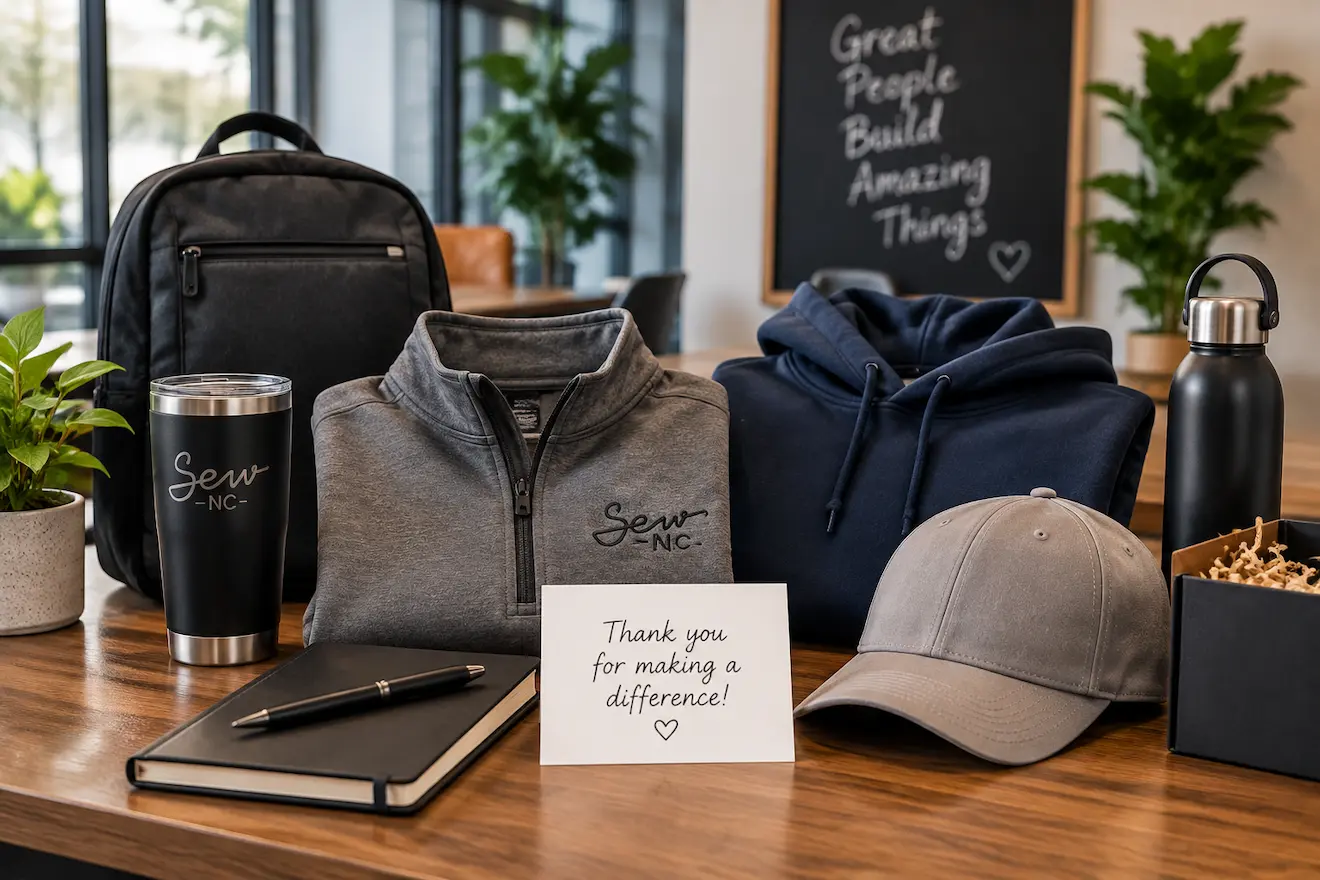
Hoodies occupy a specific place in branded apparel because they get worn. Staff leave a polo in the office; they take a hoodie home. A team wears their custom hoodie to practices, to games, to school, to the grocery store. That kind of ongoing visibility is part of why hoodies consistently show up in team apparel programs, school spirit wear, nonprofit merchandise, and employee recognition packages.
For team applications, the most requested configuration is a pullover hoodie with a left chest logo and secondary text or numbers on the back. Schools and youth sports programs that include player-specific customization on the back are managing a different level of complexity than a standard bulk run, since each piece requires individual information. Planning for that upfront, rather than treating it as an afterthought, keeps the production process organized and reduces errors.
Staff programs call for a cleaner approach. A solid-color hoodie in the organization’s primary brand color, with a well-placed left chest logo and nothing else, ages better than a design that ties the garment to a specific year or campaign. The temptation to add taglines, department names, or secondary graphics is understandable, but it usually produces apparel that employees stop wearing once the novelty fades. Clean and consistent wins for longevity.
Color selection within a bulk hoodie program trips up more buyers than expected. Adding colors to an order adds complexity; different dye lots, potentially different print setups, and more decisions for employees or team members to navigate.
Wholesale Sweatshirts and Why Garment Selection Matters More Than Price
The garment brand and style selected in custom sweatshirts for a bulk order is a decision that affects everything downstream. Buyers who choose based solely on the lowest cost per unit often find that the savings disappear when the decoration does not perform as expected, or when they try to reorder six months later and the style has been discontinued.
The right garment for the job depends entirely on how the apparel will be used and for how long. A one-time event with 200 attendees optimizes differently than a staff uniform program that needs to maintain consistency across hires and reorders over multiple years.
Mixing garment brands or styles within a single bulk run creates fit and color inconsistencies that become obvious when the pieces are worn side by side. Standardizing on one garment across a program is a production decision that pays off every time an order is rerun.
At Sew NC, garment selection is part of the conversation before anything goes to production. The wrong wholesale sweatshirt for a given decoration method or use case creates downstream problems that are harder to fix than they were to prevent.
Our bulk sweatshirts and hoodies program is built around helping buyers make that call correctly the first time, with options that work across a range of budgets, timelines, and organizational contexts.
Logo Placement on Sweatshirts and What Actually Works in Production
Placement decisions on custom sweatshirts interact with production in ways that a digital mockup does not fully communicate. A position that looks clean in a preview can create complications in actual execution, depending on the garment’s construction, the seam placement, and the decoration method being used.
Left chest placement is the industry default because it works. It sits at natural eye level in face-to-face interaction, it is compatible with every major decoration method, and it reads consistently across crewnecks, pullovers, and quarter-zips.
The standard embroidery size for left chest logos runs between 3.5 and 4.5 inches wide, which accommodates most vector logos without requiring significant simplification. Screen printing and DTF at the same position can push slightly larger while still maintaining proportion.
Full front and full back placements belong on event merchandise and team apparel more than on corporate or staff uniforms. A large graphic across the chest of a custom hoodie can be exactly right for a fundraiser or a school spirit campaign.
It is rarely the right call for a custom sweatshirt staff program, where the goal is professional appearance rather than visual impact at a distance. When a full front graphic is part of the plan, the artwork needs to be designed at that scale from the beginning. Taking a left-chest-sized logo and scaling it up to a full front print produces a result that looks stretched and unintentional.
Sleeve placement serves well as a secondary element when the chest position is already occupied, or as the sole placement on apparel where a clean chest is intentional. Hood lining prints are a specialty request that some buyers have for premium merchandise, but the production time and cost involved make them a poor fit for standard staff or event runs. These are decisions worth discussing before the order is finalized, not after artwork has been approved.
Order Planning for Bulk Sweatshirt Programs
The buyers who move through a bulk sweatshirt order without problems are the ones who show up to the process prepared. Clear artwork, confirmed quantities, a realistic timeline, and a solid understanding of what the garment needs to do — those four things eliminate the majority of production complications before they have a chance to develop.
Artwork is the most consistent source of delays. Embroidery needs a properly digitized file, not a JPEG or a screenshot. Screen printing needs clean vector files with colors separated and confirmed against the intended print colors. DTF is more forgiving in terms of file format, but the resolution and quality of the source artwork directly determine the quality of the output.
Submitting whatever is on hand and hoping the production team can work with it is how orders end up with proofs that require multiple revision rounds and push the timeline out by a week or more.
Quantity planning for custom sweatshirts is a decision that benefits from thinking past the immediate order. If the apparel is part of an ongoing staff program, building a modest buffer into the initial run is almost always more economical than placing a separate reorder at a lower quantity. Timeline is the variable that catches the most buyers off guard. A well-organized bulk order for custom sweatshirts typically needs two to three weeks from artwork approval to completion under normal production conditions.
Sweatshirts in Corporate Staff Programs
Corporate staff programs that include custom sweatshirts as part of the standard uniform or recognition package have a different set of priorities than event or team orders. Consistency across reorders matters more than novelty. Professional appearance over extended wear matters more than visual impact. And the operational simplicity of managing the program matters as much as the product itself.
The buyer running a corporate sweatshirt program is usually an operations manager or HR coordinator who needs the program to function without constant attention. That means the garment selected for the first order needs to be available for reorders, the logo files need to be archived and ready to reuse, and the ordering process needs to be simple enough to hand off without losing quality.
Color discipline in a corporate custom sweatshirts program is underrated. Ordering in the brand’s established primary and secondary colors, rather than trying to accommodate personal preferences or add seasonal variations, keeps the program looking coherent across a team of any size. The organizations whose staff apparel looks most professional are usually the ones that made the fewest color decisions rather than the most.
Mistakes That Cost Money in Custom Sweatshirt Orders
Most of the problems that show up after a custom sweatshirt order is complete did not begin in production. They began in the decisions made before the order was placed, and they are almost entirely preventable with a little preparation.
Approving a large run without a physical or digital proof is a risk that regularly produces unwanted surprises. Font rendering, color accuracy, logo sizing, and placement alignment all look different on an actual garment than they do in a digital file. A proof adds time to the front end of the process, but it eliminates the back-end problems that are far more expensive to resolve. For any first-time order with a new provider, a proof is not optional.
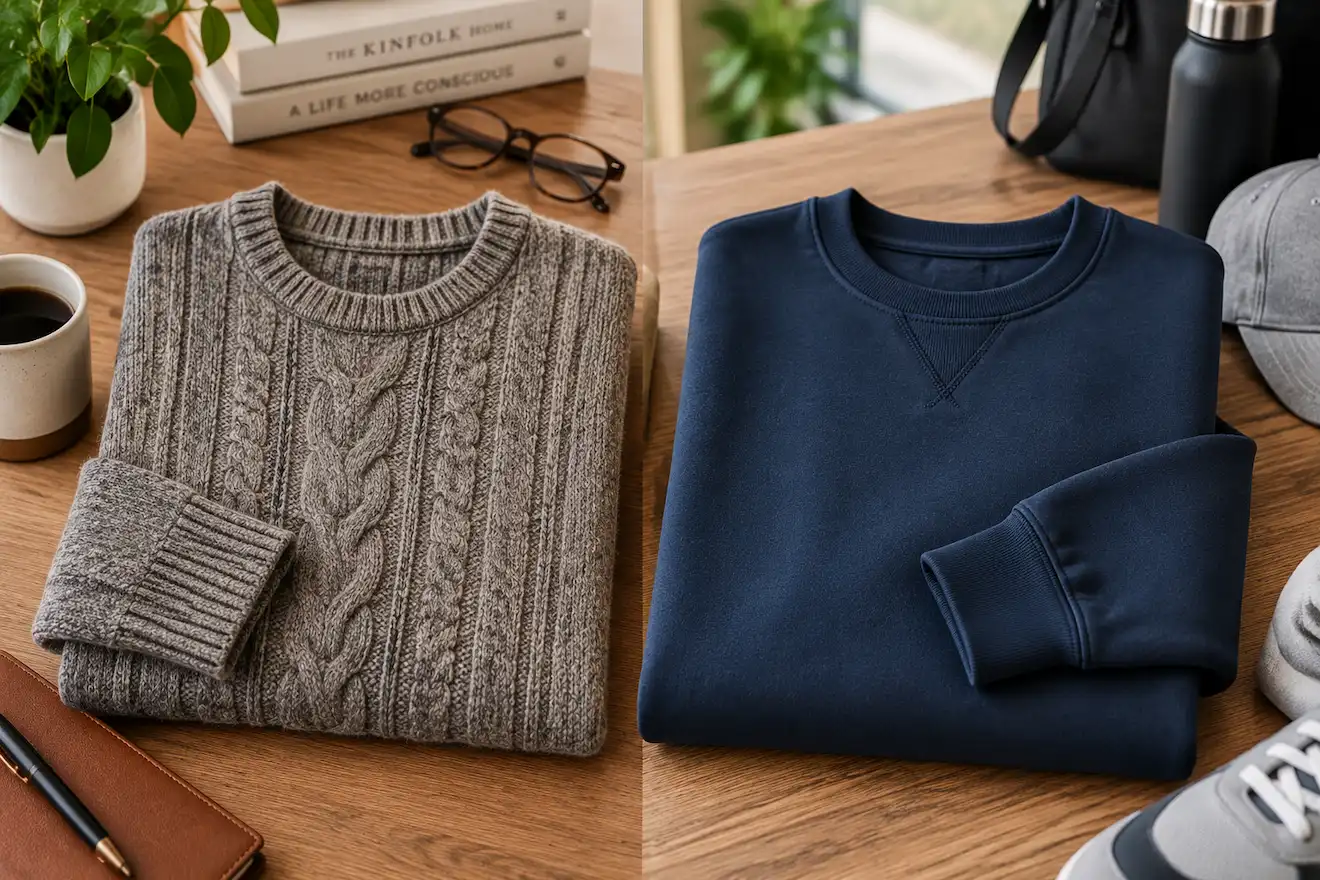
Selecting a garment based purely on price per unit without considering how it interacts with the decoration method creates a different kind of problem. A loosely knit fleece surface is difficult to embroider cleanly. A high-synthetic-content fabric does not always respond predictably to heat application. These are compatibility issues between the garment and the process, and they produce decoration results that look unprofessional regardless of the quality of the artwork or the decoration setup.
Placing an order without confirmed, production-ready artwork and without clear size distribution is where timelines fall apart. The organizations that consistently get good results from their sweatshirt programs are the ones that treat preparation as part of the process, not an afterthought.
Finding the Right Configuration for Your Program
A well-executed custom sweatshirt order is not about finding the most options; it is about matching the right garment, the right decoration method, and the right quantity to the actual purpose of the apparel. That match looks different for a school running a spirit wear campaign than it does for a construction company standardizing field uniforms, and it looks different again for a nonprofit producing merchandise for a fundraising event.
For organizations placing a first bulk order, the most reliable approach is to keep it focused. One style, one or two colors, a clean logo on a stable garment, and a quantity based on confirmed need rather than optimistic projections. A focused first order that executes cleanly builds the foundation for every subsequent run.
For programs that already exist and are due for review, the useful questions are straightforward: Is the current garment still performing the way it should? Is the decoration holding up through actual use? Is the ordering process simple enough to sustain? When the answer to any of those is no, the program is worth revisiting before the next cycle rather than just repeating what was done before.
We work through these decisions with businesses, schools, nonprofits, and organizations at every stage of their branded apparel programs, from first orders to long-running staff uniform cycles. Reach out to our team through the Sew NC contact page to walk through the options for your next custom sweatshirt order.