Promotional water bottles are one of the very few branded items that people actually carry around on purpose. People have it going to the gym, in the cupholder on the way to work and one sitting on a desk by 9.00 in the morning, which is going to have a logo in front of a whole host of new eyes all day long.
The catch is quality. A bottle that leaks, dents or tastes of old plastic gets thrown in the bin within a month and your brand with it. One that’s good in the hand will stay in rotation for years.
This guide looks at who should get which bottle, what the various materials mean, how the logos fare and when a tumbler or mug is actually the better option. At Sew NC, we plan our drinkware orders in conjunction with our apparel and headwear, so the questions below are ones we’ve actually had to answer in the shop in Winston-Salem.
Why Promotional Water Bottles Get Reached For Every Day
People drink water several times a day and each refill is in a place where someone else can see it. Break room, trailhead, locker room, conference table. The logo on the barrel gets a glance from colleagues, teammates, clients and occasionally a stranger. The brand never lifts a finger.
Compare that to a pen or a notepad which spend most of their lives in a drawer. The promotional water bottle travels with you and it’s that mobility which generates the exposure.
There’s also a value proposition angle. Reusable drinkware is the sort of thing that says “we’re mindful of waste” and that really does resonate with schools, with wellness groups and with customers who are health conscious. The bottle makes that small statement before anyone reads the logo.
Matching the Bottle to the Crowd
Staff programmes generally call for insulated stainless steel in the 20 to 32oz range. It’ll keep the drinks cold through a shift and look proper on a desk or in a truck.
Fun runs and wellbeing events need something light. A plastic sport bottle with a good grip on the body is very cost effective on a per unit basis when you’re getting hundreds of them out the door and no-one minds carrying one for a mile.
Schools go for the durable, leakproof lid, in sizes that are suitable for little hands and fit in the side pocket of a backpack. A bottle that will soak through a maths worksheet is quickly banned.
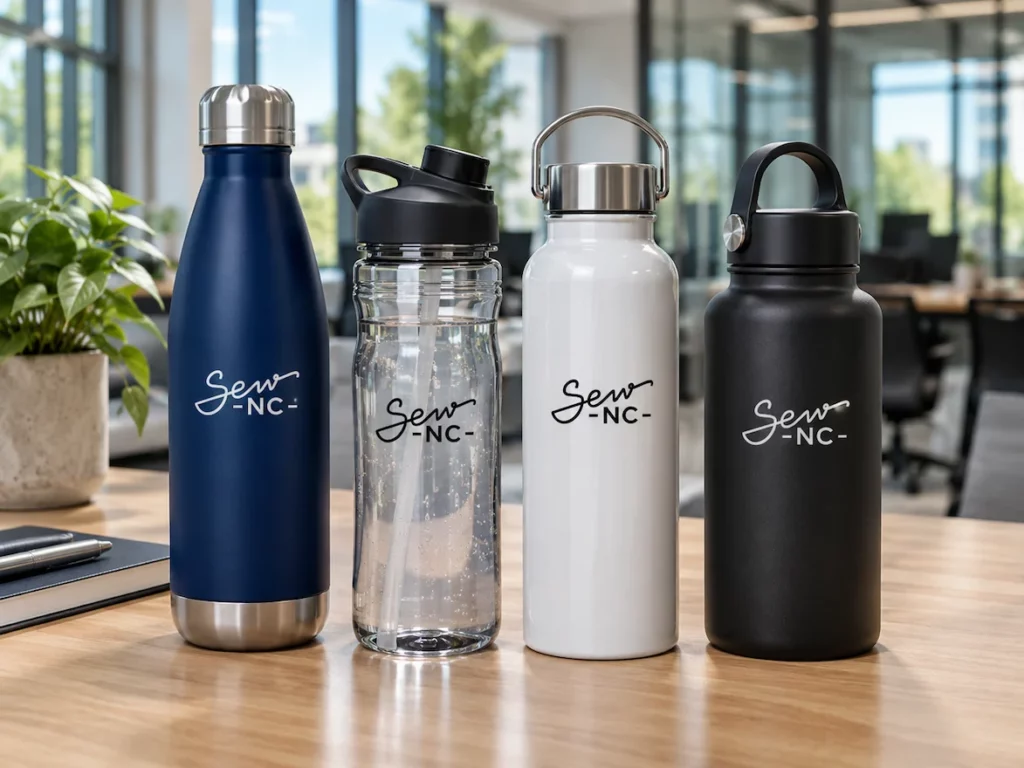
Gyms and fitness types will go for big capacity and a wide mouth for the ice. Customer giveaways sit in the middle: good enough to keep, priced so you can have a decent run. There’s no one size fits all when it comes to the type of water bottle, so the best promotional water bottles for one group may be completely unsuitable for another.
Materials and Construction That Hold Up
Double wall vacuum insulated stainless steel is the standard for a bottle that’s meant to last. It’s far better at withstanding drops than plastic and will keep ice solid for hours. It’s a higher price per unit but for staff gifts and client programmes it’ll often pay for itself over the course of many years of use.
Copolyester is lighter and cheaper and has clear walls which is ideal for sports and event crowds. Aluminium takes bright colours well and is almost weightless. Glass with a silicone sleeve is very much in with the wellness buyer but a poor match for kids or job sites.
Lids are just as important as the body. A cheap lid will leak and a leaking bottle will ruin a bag and the very first impression you make with it. Check the gasket, the threads and how the cap has coped with being tossed about in a back seat.
Before you go ahead and order a run of promotional water bottles ask for a physical sample. A product photo tells you absolutely nothing about the weight of the bottle, the finish or how the lid feels in your hand.
Custom Tumblers and Promotional Mugs: When They Beat a Bottle
A bottle is built for movement. A tumbler is built for the desk and the commute (usually has a handle, a lid and a base that slides into a cup holder). If your people drive to work and are drinking coffee all morning then custom tumblers are going to be used far more than a sports bottle ever would.
Promotional mugs are ideal for office use, for hot drinks and as part of a gift set. The ceramic is quite a nice feel which is good for client gifts and it’s something you can just leave on your desk and people will see it. It rarely leaves the building, so public exposure stays low.
The simple rule is to follow the recipient’s day. People who walk, train, or work on their feet reach for a bottle. People who sit and sip reach for a tumbler or a mug. When the audience is active, outdoors, or spending time where a spill-proof container is the obvious choice, promotional water bottles usually come out ahead.
Decoration Methods for Drinkware
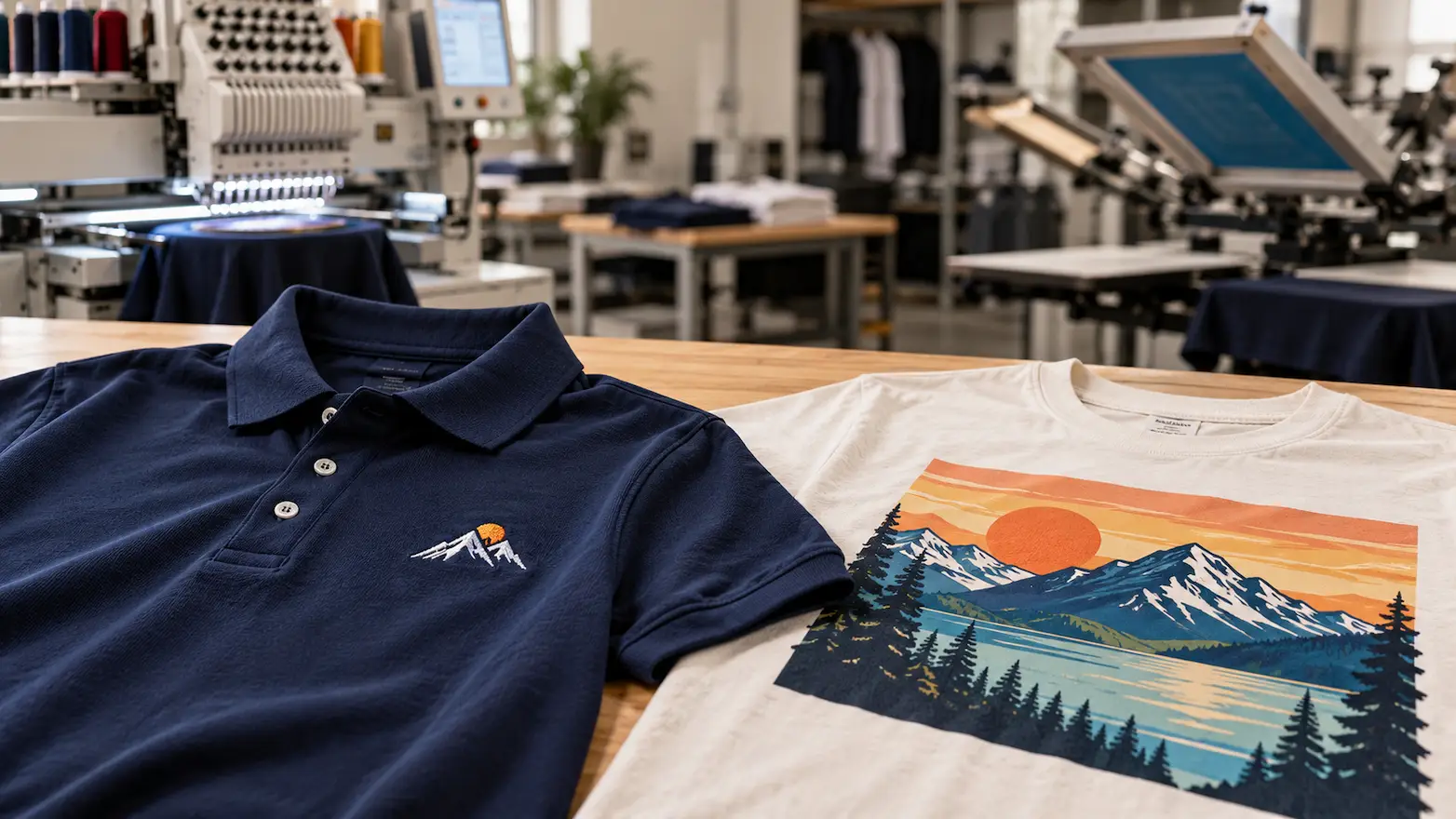
Laser engraving and screen printing are the normal ways of putting a logo on drinkware and we do both in our Winston-Salem production shop. Which of those two you go for will depend on the finish of the bottle, the shape of the bottle and the artwork.
Engraving cuts through the powder coat on stainless steel and leaves a permanent, scratch resistant mark (usually in one tone). It’s a very refined finish and will withstand the dishwasher. Screen printing can handle the bold spot colours and is good on smooth curved surfaces. The ink on a bottle that’s going to be scrubbed every day will age much faster than an engraved mark.
The most eye-catching logo is often the least durable. One that starts to fade by month three is actually more of a problem than a simple one that just keeps its colour. Always ask how the logo will look after a year of washing and all the rubbing it will receive on your promotional water bottles, rather than just how it looks on day one.
Logo Design and Placement on a Curved Surface
A bottle barrel has a very narrow printable zone (often only a few inches tall) so a logo designed for letterhead will rarely print untouched.
Keep the artwork bold. Thin lines and small type will blur on the curved reflective surface. One or two colours work far better than five and good contrast against the bottle colour does more than any other effect.
Placement is a design call. Centreing the logo on the front face means it’s facing the viewer every time the bottle is held. A wrap works for event bottles carrying a date or a message, as long as the surface is a smooth cylinder.
Send the vector files and colour references with the order. Guessing on the colour is the single biggest source of disappointment with promotional water bottles (particularly on dark finishes where a light logo can end up looking completely washed out). A proof is issued for your approval prior to production commencing so any changes can be made on screen rather than on the actual finished product.
Pairing Promotional Water Bottles With Apparel and Headwear
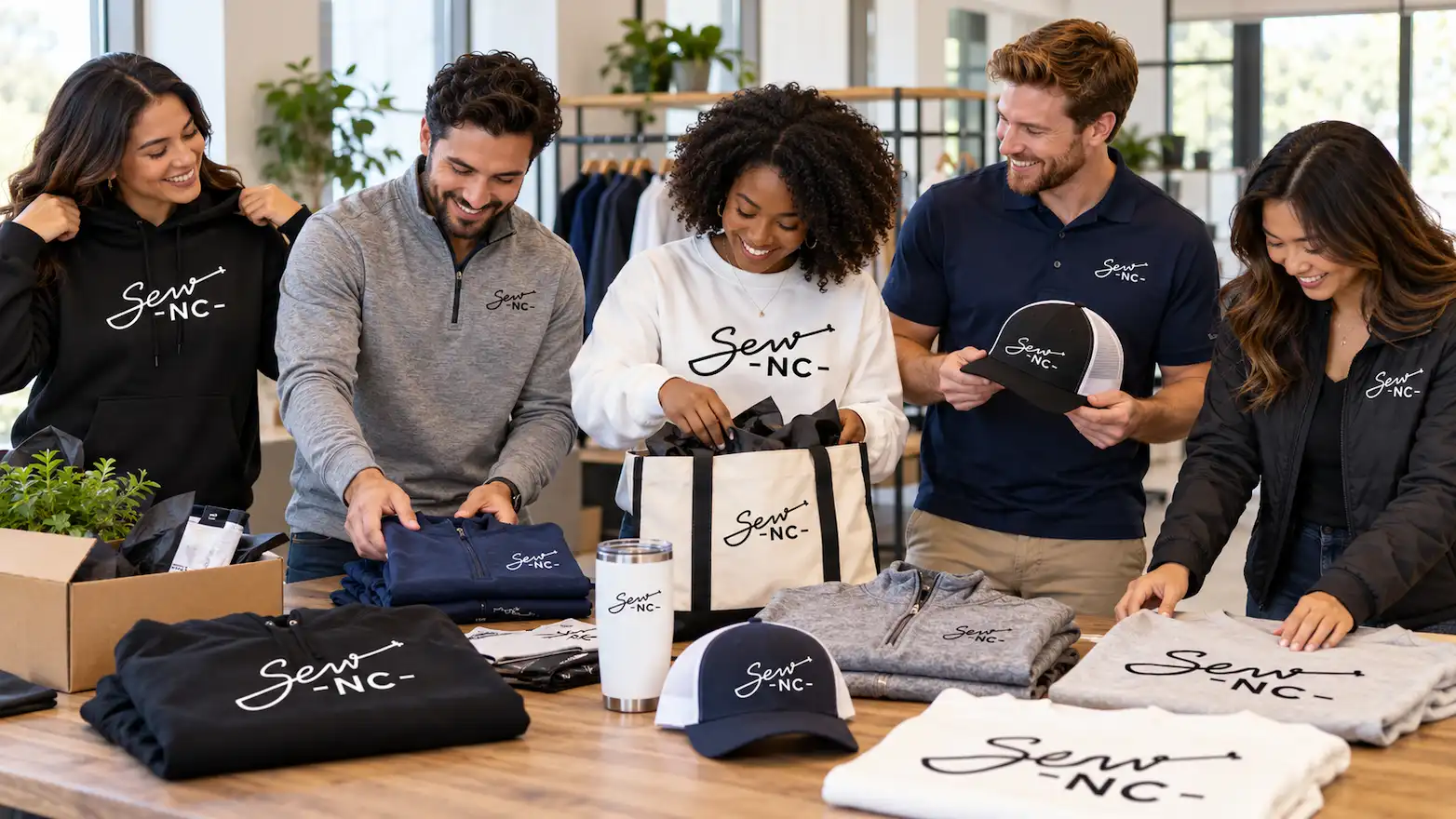
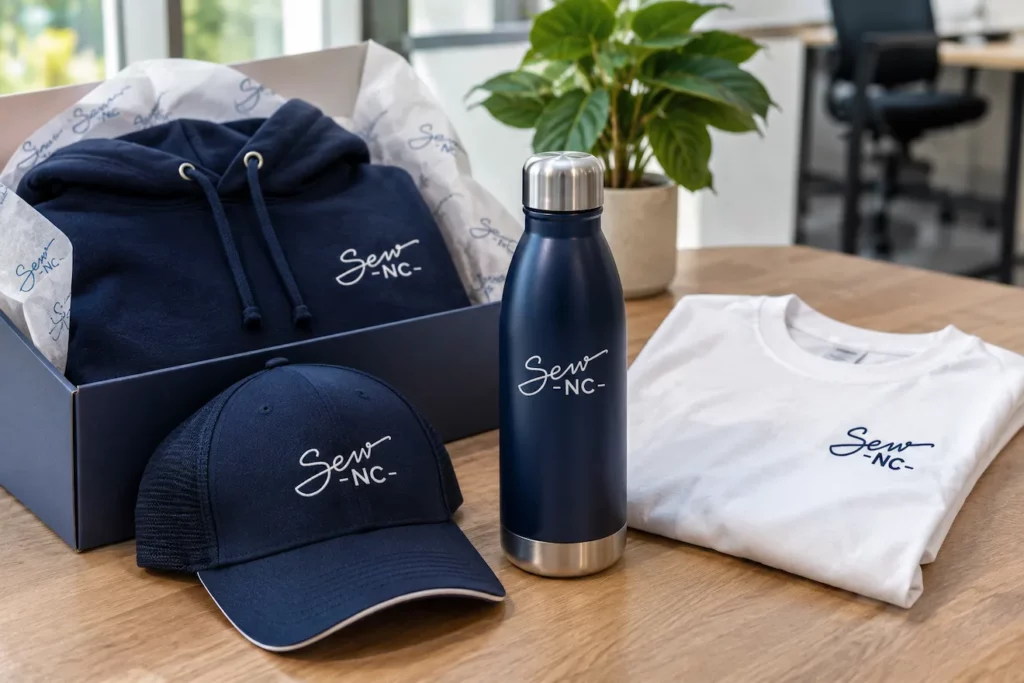
A bottle on its own is a solid. A bottle with a cap, a tee or a hoodie is a program. The bottle is for the desk and the gym. The cap is for the streets. The tee is for the streets. The hoodie is for the streets.
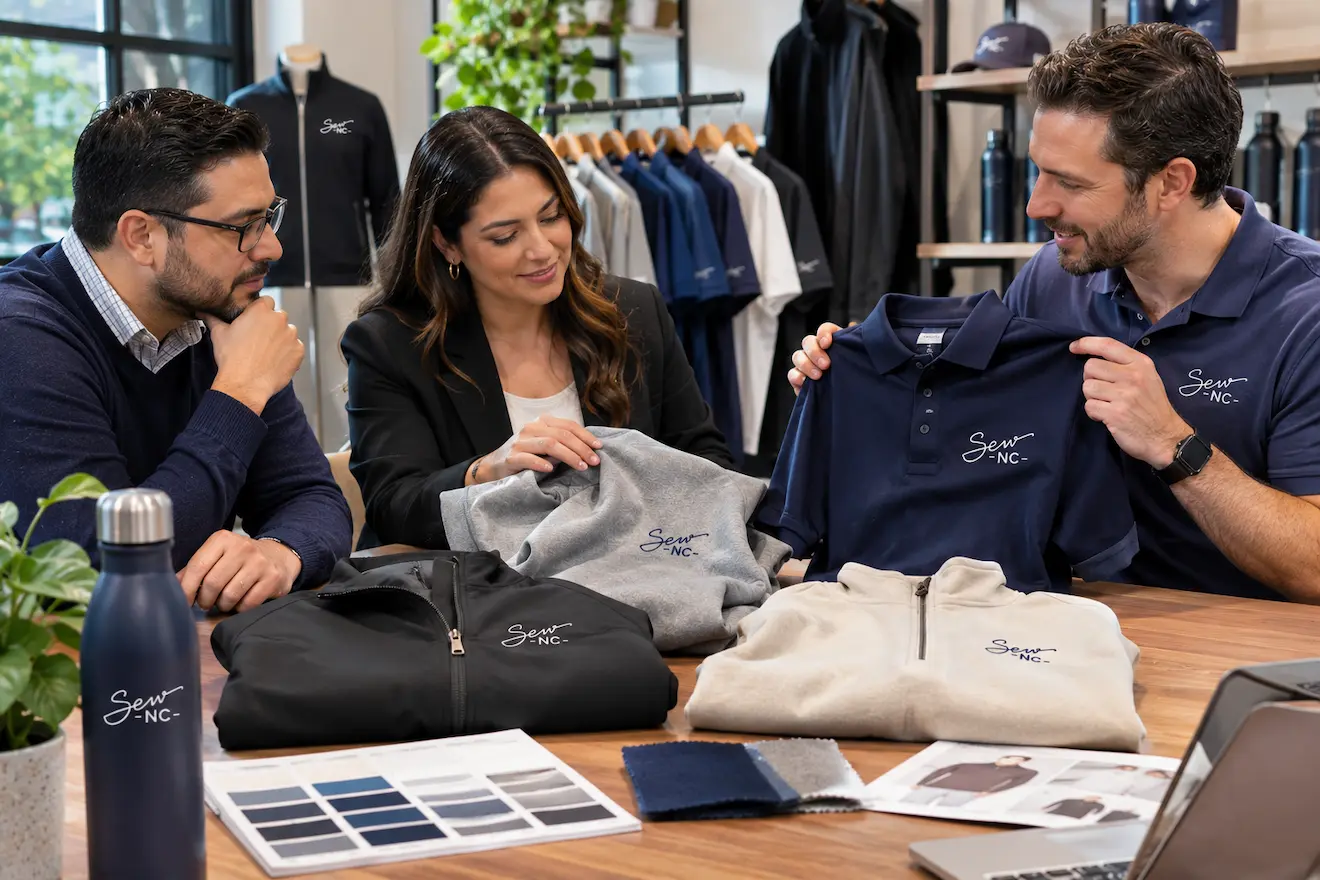
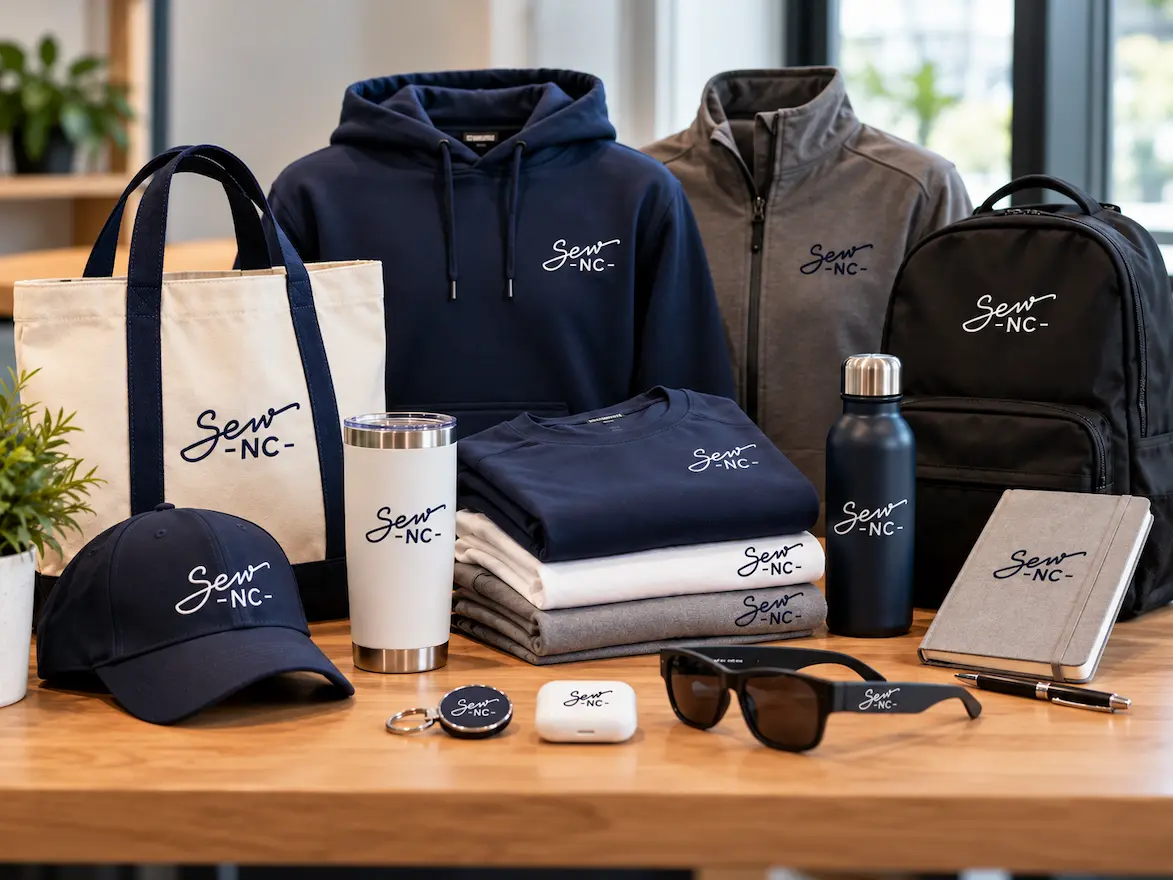
Drinkware often shares a conversation with embroidered hats and sweatshirts, because one logo file, one color palette, and one delivery date make the whole package look coordinated. If you are building a mix, Sew NC promotional products services show how drinkware, apparel, and headwear can share a single order.
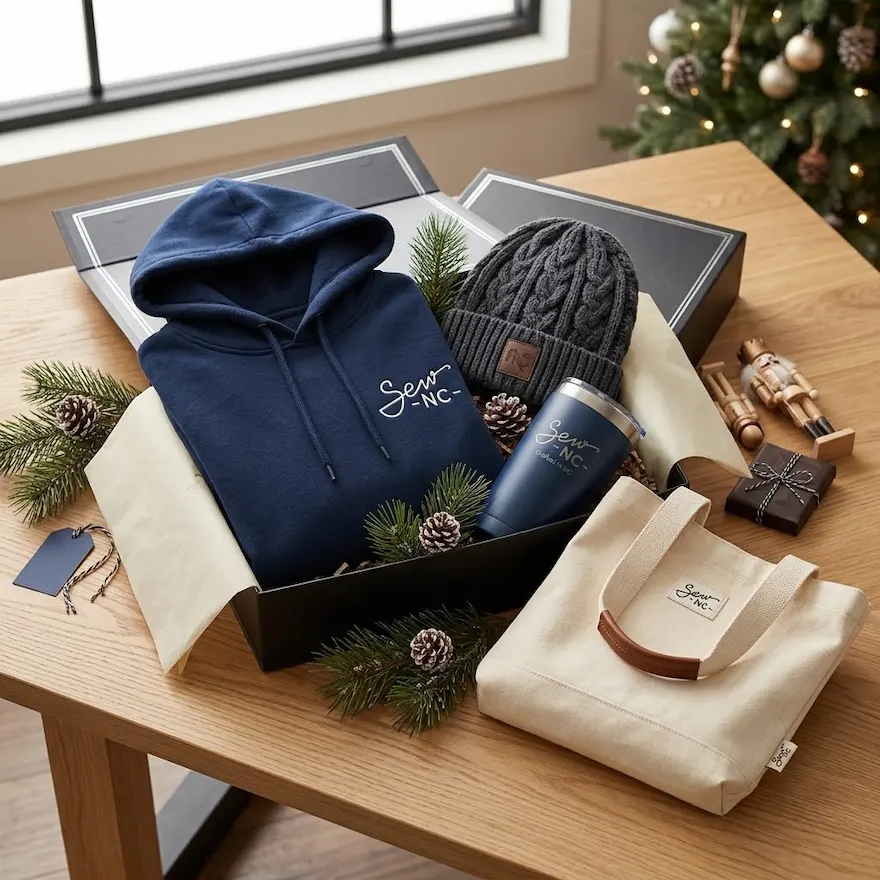
A set of promotional water bottles, a quality cap and a simple tee will do perfectly for a wellness event, a new hire kit or a volunteer programme. It also gives you the opportunity to spend a bit more on one key piece and keep the rest of the kit very basic.
Quantity, Budget, and Timing
For staff programmes, start with headcount plus 10 to 15% for new starters and replacements. For events and giveaways, build the number on confirmed attendance rather than on any kind of optimistic projection. Leftover bottles are easy to store, just a design with a date on it will expire.
Min order quantities will vary by product and by method of decoration so you need to check those before you fall for a style. The pricing will also vary across quantity tiers and in some cases a slightly larger order will be sufficient to bring the unit cost down enough to make it worthwhile. Always ask for a written quote which will contain the unit price, the decoration charge and the proof date so there’s no surprise later on.
Go by cost per use rather than sticker price. A bottle that costs a bit more but is used every day for two years is going to beat a cheaper bottle that’s gone in a month. If you’re planning on doing promotional water bottles for a fall holiday or a spring wellness campaign, leave space on the calendar as decorated merchandise typically takes 2-3 weeks from artwork approval and drinkware can take even longer.
Mistakes That Cost the Most
Ordering without a sample tops the list. Weight, finish, lid feel, and insulation show up in the hand. Pairing a light bottle color with a thin, light logo comes second. Contrast fails quietly and gets noticed when the box is opened.
Others repeat often. Too many colors in the artwork. A lid chosen as an afterthought. A bottle sized for the buyer’s taste instead of the recipient’s routine. No care instructions, so people run a printed bottle through a hot dishwasher cycle it was never built for.
Every one of these is cheap to fix before production and impossible to fix after. A short talk about audience, finish, and artwork heads off most of the trouble with promotional water bottles before a single unit is made.
Choosing Promotional Water Bottles People Keep
The bottles that last in someone’s routine do three things well: they perform, they look good, and the logo is applied cleanly. Everything else is detailed.
When you’re picking promotional water bottles, start with the person you’re giving them to. A runner will have a very different requirement to a teacher, a crew lead and a client. The right bottle will be the one that suits that individual.
Sew NC helps businesses, schools, non profits and all sorts of local organisations to work through those choices prior to an order going in so the drinkware is right for the audience and the budget. Add practical drinkware to your next promotional order and just let us know who it’s for, how many you need and when you need them in hand.