Small business promotional items operate in a different context than the branded merchandise programs large corporations run, and the selection criteria that make sense at enterprise scale rarely apply to a local business trying to build visibility in the community it actually serves. The geographic concentration of the audience, the personal nature of the customer relationships, and the tighter budget per impression all push small business promotional decisions in a specific direction that generic merchandise catalogs do not account for.
The items that work for a small business are not necessarily the cheapest ones or the most novel ones. They are the ones that earn a place in the recipient’s daily routine and carry the brand into the community settings where that business needs to be seen.
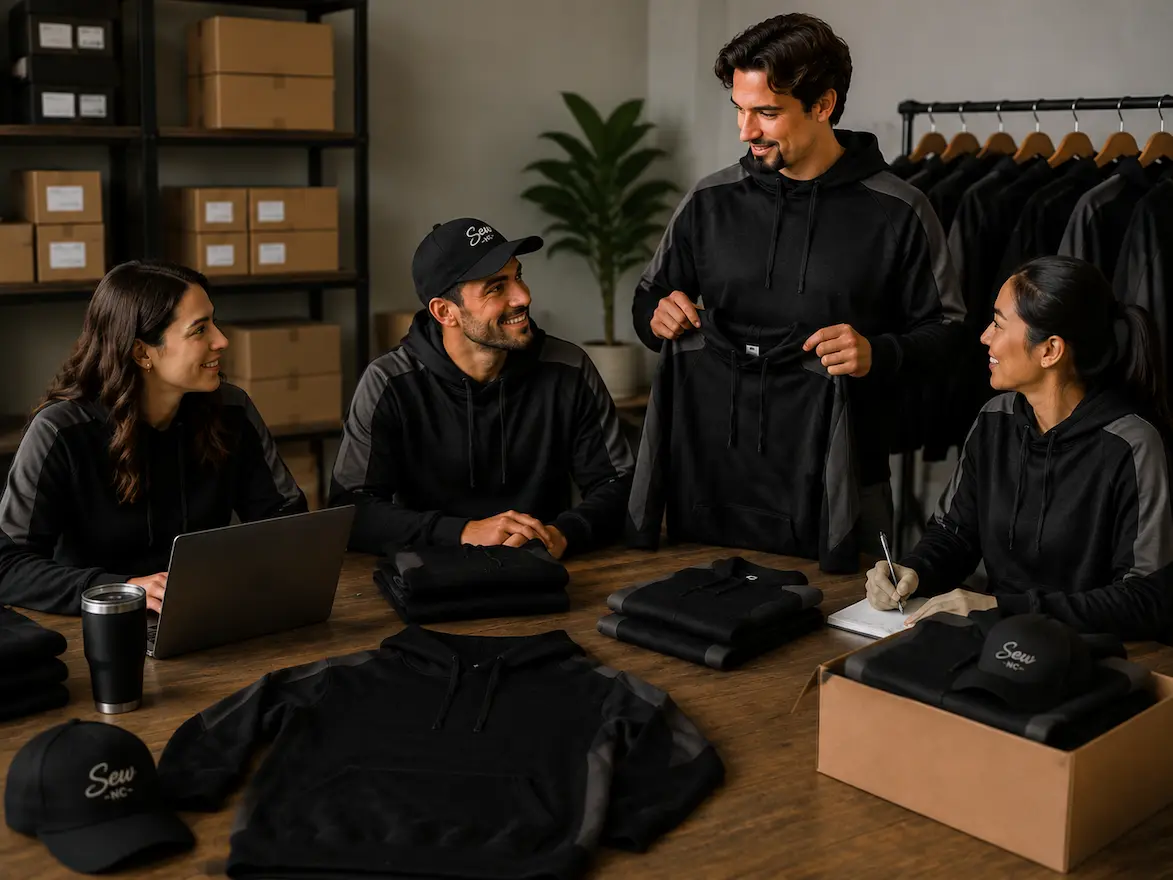
At Sew NC, small business promotional items come through from local contractors, service companies, retail shops, restaurants, and professional services firms. The programs that produce real return share a consistent characteristic: the item was selected with the specific local audience and the specific community context in mind before the logo went on anything.
Why Local Context Changes the Selection Criteria
A national brand distributing promotional merchandise at scale optimizes for reach. A local business distributing small business promotional items optimizes for depth. The goal is not to put a logoed item in as many hands as possible. It is to put the right item in the hands of people who live and work in the same geographic area the business serves, people who will use it in the very community spaces where the brand needs recognition.
That geographic concentration is actually an advantage, not a limitation. When a local plumbing company’s customer wears a branded t-shirt to the neighborhood farmers market on Saturday morning, the impressions that shirt generates happen among exactly the people most likely to need a plumber. When a local restaurant’s branded tote gets used for grocery runs in the surrounding neighborhood, it appears in the aisles alongside the people who live close enough to become regular customers. That hyper-local visibility is something paid advertising in the same budget range cannot produce with the same precision.
The selection criteria for small business promotional items follow directly from that logic. The item needs to be functional enough that the recipient uses it regularly. It needs to be used in public settings within the community the business serves. And it needs to carry the brand clearly enough that the impression generated is a positive one rather than a neutral or negative one based on the quality of the item itself.
Apparel: The Highest-Return Category for Local Businesses
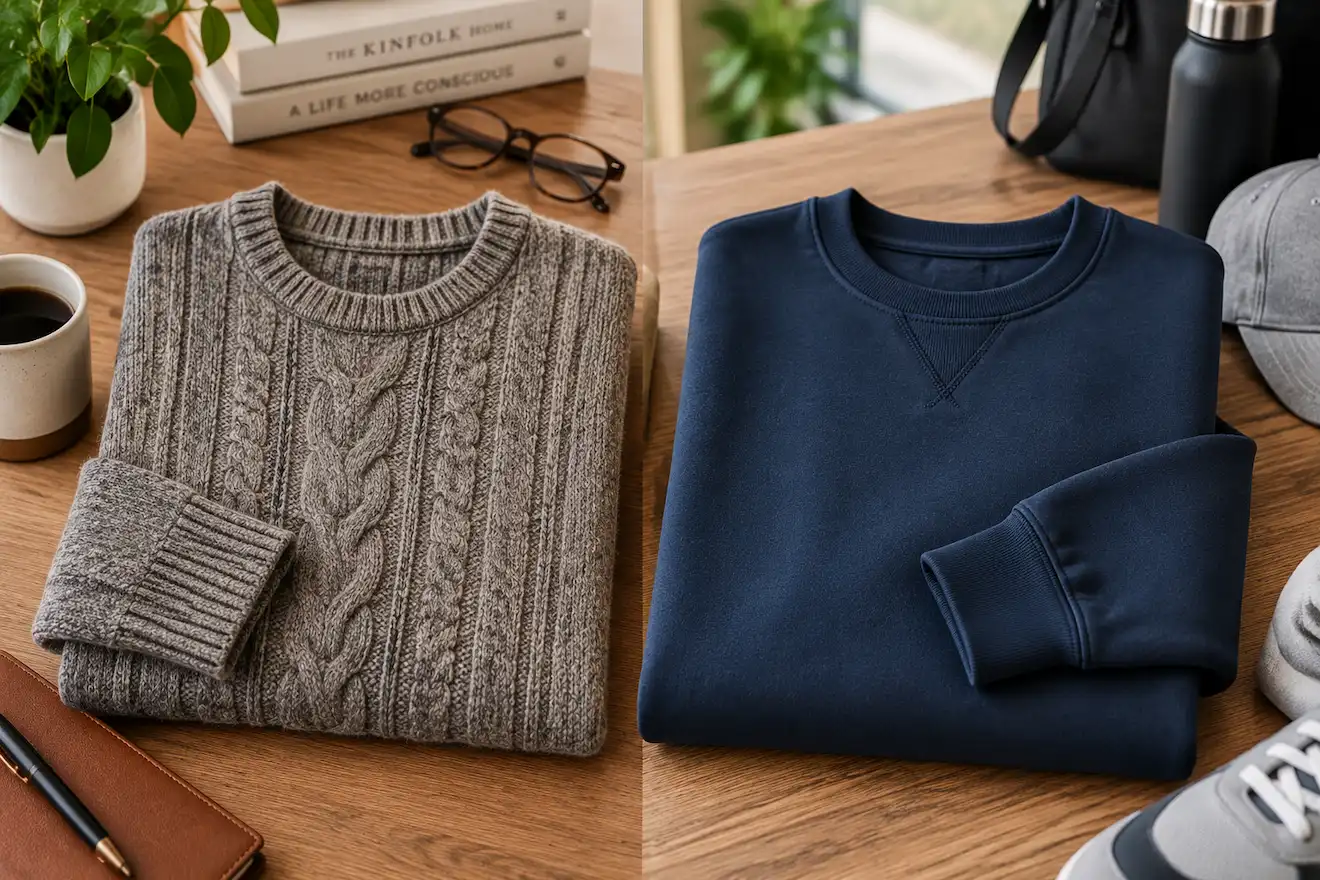
Branded apparel generates more impressions per dollar spent over the life of the product than any other category of small business promotional items, and the reason is not complicated. People wear clothing every day in public. A quality branded t-shirt, hoodie, or hat worn regularly in the neighborhood where the business operates reaches the right audience without any additional cost after the initial order.
The apparel items that perform best for local businesses are the ones the recipient would genuinely choose to wear. A well-made t-shirt in a color someone actually likes, with a clean logo that does not dominate the garment, earns its place in a rotation because the item is worth wearing, not because the recipient feels an obligation to represent the brand. That voluntary use is what produces the sustained community visibility small business promotional items are supposed to generate.
For service businesses, contractors, and local companies whose team members work visibly in the community, branded workwear functions as a permanent promotional presence. A landscaping crew in matching branded shirts working in a neighborhood on a Tuesday afternoon is generating impressions among every homeowner on the street. That visibility costs nothing beyond the initial apparel investment and happens every day the crew is working.
The practical starting point for small business apparel as a promotional item is a simple, well-made t-shirt or hoodie in the business’s primary brand color with a clean left chest logo. Screen printing handles that combination at small business quantities efficiently, embroidery elevates the perceived quality for client-facing or gift applications, and DTF covers full-color or complex logo situations where simplification would compromise the brand identity.
Branded Hats: Visible, Practical, and Consistently Worn
Hats sit at eye level in public spaces, which makes them one of the most effective small business promotional items available on a per-impression basis. A branded cap or beanie worn during a commute, a weekend errand, a neighborhood walk, or a local event puts the logo directly in the sightline of everyone nearby without any effort from the business after the initial distribution.
Structured embroidered caps are the most durable and professionally finished option in the small business promotional headwear category. The structured front panel provides a stable embroidery surface, the logo registers consistently across a production run, and the finished product communicates that the brand takes its presentation seriously. For client gifts, referral thank-yous, and community visibility programs, a well-made embroidered cap in the business’s primary color is a product people keep across seasons.
For small businesses operating in cold-weather markets, beanies as promotional items generate sustained impressions across the winter months in a way that summer-appropriate items cannot. A beanie worn daily from November through March produces a volume of community impressions over that period that most paid local advertising campaigns would not match. The functional value of the item drives consistent use, and consistent use in a concentrated geographic area is exactly what small business promotional items are designed to produce.
The logo application on promotional headwear communicates quality in a way the item itself cannot override. A poorly embroidered logo on a well-made hat still reflects poorly on the brand. A clean, correctly sized embroidery on a midrange hat looks intentional and professional. For small businesses where the brand impression matters in face-to-face community interactions, the decoration quality is as important as the garment quality.
Drinkware: Daily Use in Visible Settings
Quality branded drinkware earns a place in the category of small business promotional items that generate the deepest sustained daily impressions because it fits into routines the recipient already has without requiring any behavioral change. A branded insulated tumbler appears on a home office desk, in a car cupholder, at a coffee shop table, and in a conference room. Each appearance is an impression in a different setting with a different audience.
The word quality matters more in this category than buyers sometimes account for at the selection stage. A poorly insulated cup that fails to maintain beverage temperature gets replaced within months. A well-made drinkware item stays in rotation for years. The per-unit cost difference between those two outcomes is real but modest relative to the difference in return over the item’s lifespan. For small businesses where every dollar of the marketing budget needs to work, a quality drinkware item at a slightly higher per-unit cost produces a measurably better return than a cheaper version distributed at the same moment.
For local service businesses that interact with customers face-to-face, a branded drinkware item as a thank-you gift after a completed job, a new client welcome, or a referral acknowledgment creates a positive brand association that travels into the recipient’s daily life. Every use of the item reactivates that association in a small way, which is the kind of low-effort ongoing relationship maintenance that small businesses benefit from most.
Bags and Totes: Community Visibility on a Budget
A branded tote bag used for grocery runs, farmers markets, and weekend errands in the neighborhood surrounding a local business is a promotional item generating community impressions in the exact geographic area the business serves. The visibility is concentrated, repeated, and entirely organic after the initial distribution. For small businesses with limited promotional budgets, the cost-per-impression calculation on a quality branded tote used twice a week in a local community setting is difficult to beat.
Canvas totes work particularly well as small business promotional items for businesses whose customer base is environmentally conscious, community-oriented, or locally rooted. A yoga studio, a local market, a natural foods retailer, or a community-focused service business finds that a branded canvas tote resonates with its audience in a way that a plastic bag or a generic giveaway item does not. The item communicates something about the business’s values before the logo even registers.
Utility bags, drawstring bags, and branded backpacks work for small businesses whose customers include families, youth programs, or active community members who carry gear regularly. A kids’ sports gear bag, a gym bag, or a commuter backpack from a local business travels into exactly the community settings where that business wants its brand present, and it does so every time the recipient picks it up.
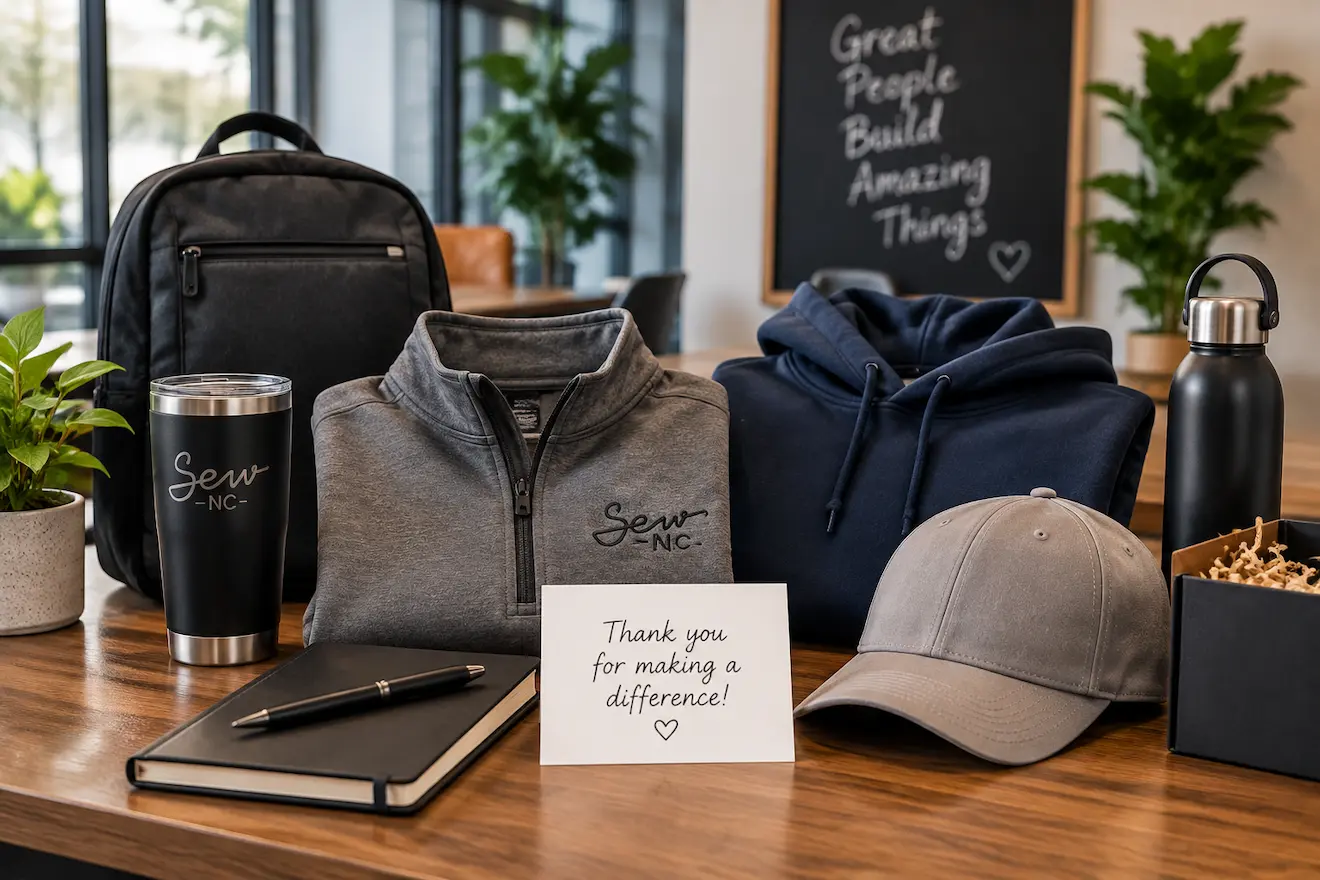
At Sew NC, we help local businesses identify which small business promotional items fit their specific community and customer context rather than defaulting to whatever is most popular in a general merchandise catalog. Our promotional products services cover apparel, headwear, drinkware, bags, and branded merchandise for businesses across the region whose promotional budgets need to work harder per dollar than national campaigns do.
Why Quality Determines Whether Promotional Items Work
The most consistent mistake in small business promotional items selection is optimizing for the lowest possible per-unit cost without accounting for how the quality of the item affects whether it gets used and how it reflects on the brand when it is.
A poorly made item with a well-applied logo does not build positive brand associations. It communicates that the business was willing to put its name on something cheap, which is precisely the opposite of the impression a promotional item program is supposed to generate in a local market where personal relationships and community reputation matter more than they do in anonymous national markets.
The local business context makes quality more important, not less. A customer who receives a quality branded item from a local plumber, a neighborhood restaurant, or a community-focused service business experiences that quality as a reflection of the business’s overall standards. A customer who receives a cheap, poorly finished item experiences the same logic in reverse. In both cases, the promotional item is communicating something about the business that the business itself did not explicitly say.
Decoration quality is the other variable that small business owners sometimes underestimate when selecting promotional items. A crooked print, an embroidery that is already unraveling, or a heat transfer that is lifting at the edges after the first wash does more damage to a local business’s community reputation than simply not distributing a promotional item would have done. The item is in the community representing the brand, and what it says depends entirely on how well it was made and how cleanly the decoration was applied.
Planning Small Business Promotional Item Orders
Small business promotional items work best when they are selected for a specific purpose and a specific audience rather than ordered generically because the business felt it should have something to give away. Clarity about the purpose before the order is placed produces items that serve that purpose. Ordering without that clarity produces inventory that sits in a storage room waiting for the right occasion that was never defined.
The most useful planning question before ordering any small business promotional item is what the recipient will do with it in the week after receiving it. If the honest answer is that most recipients will set it aside within a few days, that is a signal to reconsider the item selection rather than to proceed with a lower-quality version of the same choice. The item that earns a place in the recipient’s routine generates returns across months or years. The item that does not earn that place generates a single impression at the moment of distribution and nothing after.
Quantity planning for small business promotional items should reflect the actual distribution plan rather than an aspirational one. Ordering 500 branded items without a clear plan for distributing 500 branded items produces surplus inventory of a promotional item that has a shelf life tied to how current the design and contact information on it remain.
Ordering conservatively at first, distributing intentionally, and reordering based on the actual adoption rate of the first run produces better information and better return than a large speculative order placed without a distribution plan behind it.
Reach out through the Sew NC contact page to pick the right promotional items for your local business. The selection conversation is short and the return on getting it right compounds across every impression the item generates in the community your business serves.