Low profile hats sit differently on the head, present the logo differently to the viewer, and interact with embroidery differently in production than structured caps do. For buyers who have worked exclusively with high-crown structured hats, the switch to a low profile format produces results that require different preparation to get right.
Understanding what the format does well, where it falls short, and how those characteristics interact with logo design and embroidery setup is the starting point for any branded headwear decision involving this style.
At Sew NC, low profile hats come through as part of corporate casual programs, golf outings, client gift packages, and staff headwear programs where the buyer wants a cleaner, more understated look than a traditional structured cap provides.
What Defines a Low Profile Hat
A low profile hat is defined by its crown height and front panel construction. Where a standard structured cap uses buckram or a similar stiffening material to hold the front panel upright and maintain the high-crown shape, a low profile hat uses little to no internal stiffening. The result is a cap that sits closer to the head, has a flatter front panel, and produces a softer overall silhouette than the traditional baseball cap profile.
The reduced crown height changes how the hat fits across different head sizes and shapes. Buyers accustomed to structured caps sometimes find that low profile options require more attention to sizing, since the unstructured crown does not expand and adjust the way a stiffened panel does. For programs ordering across a wide range of team members, confirming that the selected style offers enough adjustability to fit the full range of the group is a practical step before committing to a garment.
The brim on a low profile hat is typically shorter than on a structured cap, which contributes to the cleaner overall profile. Some styles use a slightly curved brim, others use a flatter brim, and the choice between them affects the overall aesthetic of the finished hat as much as the crown height does. For programs where brand consistency across a team matters, standardizing on a single brim style within the run prevents the kind of subtle variation that becomes visible when hats from the same order are compared.
Low profile hats are available in a range of materials including cotton twill, cotton canvas, performance blends, and washed fabrics. Each material affects how the front panel responds to embroidery hooping and how the finished hat holds its shape through regular use.
Low Profile Hats Versus Structured Caps: What Changes in Production
The structural difference between a low profile hat and a traditional structured cap is not just aesthetic. It changes how the hat behaves during the embroidery process and how the finished logo reads on the front panel.
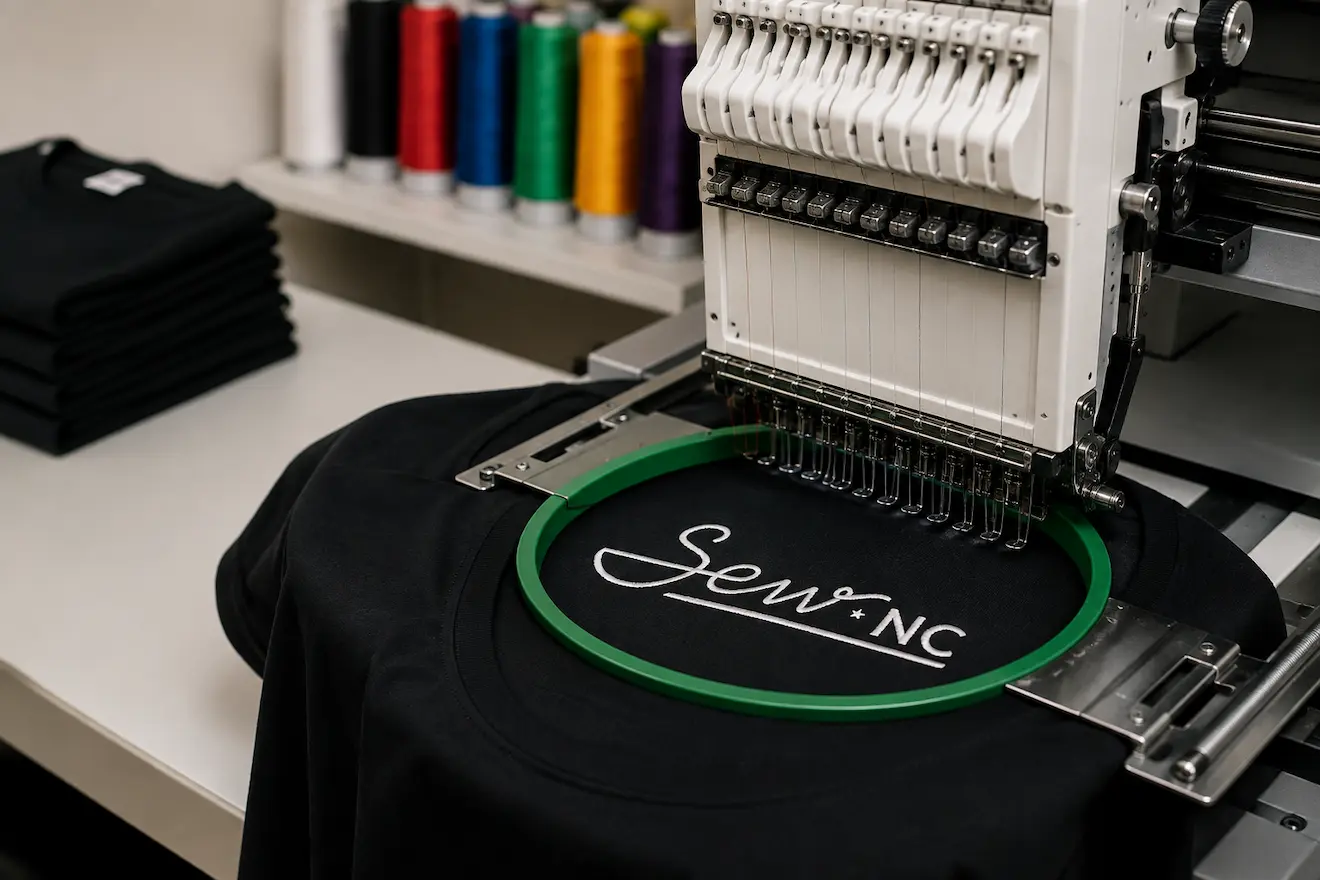
A structured cap with buckram backing holds its shape under the hoop clamp during embroidery, which stabilizes the embroidery surface and allows the needle to register consistently across the design. That stability is part of why structured caps produce predictably sharp embroidery results. The buckram acts as a built-in backing material that resists the pulling and distortion that unstructured fabric is vulnerable to during stitching.
A low profile hat without buckram backing requires the production team to compensate for that missing structural support. The front panel is more susceptible to movement under hoop tension, which affects how the stitching sits on the fabric and how the finished logo reads. A digitized file built for a structured cap does not automatically produce the same result on an unstructured low profile panel. Underlay settings, stitch density, and pull compensation all need to be calibrated for the specific hat construction being decorated.
This is the production detail that most buyers do not know to ask about and that most results differences between low profile and structured cap embroidery trace back to. A production team that adjusts for the structural difference produces consistent, sharp results on low profile hats. One that applies the same setup used for structured caps produces a result that looks slightly off in ways the buyer may not be able to identify but will clearly see.
Logo Design Constraints on Low Profile Hats
The front panel of a low profile hat offers a smaller and less rigid embroidery canvas than a structured cap, and logo design for this format requires more attention to the constraints of the space than buyers sometimes bring to the initial artwork submission.
The usable embroidery area on a standard low profile hats front panel runs approximately 2 to 3 inches wide and 1.5 to 2 inches tall, depending on the specific hat style and crown height. That is a meaningful reduction from the 4 to 5 inch width available on many structured cap panels, which means logos that work well on a traditional cap may need to be simplified or resized to read cleanly in the low profile format.
Text is the element that creates the most issues. A logo with supporting text that is legible at 4 inches wide on a structured cap may compress past the point of readability at 2.5 inches on a low profile panel. Minimum readable text height in embroidery on a hat surface is approximately 0.3 to 0.4 inches, and achieving that within the constraints of a smaller overall embroidery area requires a logo design that prioritizes the primary mark over secondary elements.
Color count in hat embroidery follows the same production logic as other embroidery contexts but with more visual consequence at small scale. A logo that uses five or six colors in a tight design at 2.5 inches wide can read as visually busy rather than refined. Reducing to three or four colors and simplifying the logo to its most recognizable elements typically produces a cleaner result that reads more clearly at the scale the format allows.
Custom Trucker Hats and How They Differ from Low Profile Styles
Custom trucker hats occupy a different position in the branded headwear category from low profile styles, and buyers who are deciding between the two formats benefit from understanding how each one reads in context before committing to a production run.
A trucker hat is defined by its foam or structured front panel and mesh back panels. The front panel is typically higher and more rigid than a low profile hat but constructed differently from a traditional cotton twill structured cap. The foam construction creates a firm, flat embroidery surface that in some ways is easier to work with than a soft unstructured panel, but it also limits the subtlety of the aesthetic in a way that some corporate programs find at odds with the professional presentation they are trying to achieve.
Custom trucker hats read as casual and approachable in a way that structured caps and low profile hats do not, which makes them appropriate for specific brand personalities and program contexts. Brands whose identity is deliberately relaxed, regional, or outdoor-oriented find trucker hats a natural fit. Brands whose corporate casual program is aimed at a more professional presentation often find the trucker hat aesthetic works against the impression the program is trying to create.
For programs that need to accommodate both a casual and a professional headwear option, a low profile hat serves the more formal context while a custom trucker hat covers the casual end without requiring two completely different embroidery setups if the logo is consistent between them.
Custom Embroidered Hats: Placement Options Beyond the Front Panel
Most buyers default to front panel center placement for embroidered hats, and most of the time that default produces the right result. For programs with specific aesthetic goals, secondary placements and multi-location options expand what a branded headwear program can communicate.
Side panel placement, either on the left or right side of the crown, is the most common secondary location after the front panel. It works well for logos that have a horizontal format that fits better on the side of the crown than compressed into the front panel’s more square embroidery area. It also works as a supplementary placement alongside a front logo, adding a secondary brand element or text that does not fit within the front panel’s dimensions.
Back panel embroidery is a specialty placement that some buyers request for programs where the back of the hat carries information the front cannot accommodate, such as a website, a tagline, or a secondary organizational identifier. On low profile hats, back panel embroidery requires the same structural compensation as front panel work, and the curved surface of the back crown adds additional complexity that needs to be accounted for in the digitizing setup.
Underbrim embroidery is a detail placement that appears in premium merchandise and limited-run programs where the brand wants a subtle distinguishing element that is visible only when the hat is removed or tilted. It is not a primary branding location but functions as a craftsmanship detail in programs where the overall quality of the hat is part of the brand message.
At Sew NC, we work through logo placement and hat structure decisions with buyers before anything goes into production. Our custom embroidered hats service covers low profile hats styles, structured caps, trucker hats, and beanies for staff programs, corporate gifting, golf outings, and organizational headwear across the region.
Low Profile Hats for Corporate and Golf Programs
The contexts where low profile hats generate the most consistent demand in the commercial headwear market are corporate casual staff programs, golf outings and club merchandise, client gift programs, and everyday branded apparel for businesses whose brand identity favors a cleaner, less conspicuous headwear aesthetic.
Golf programs represent one of the most specific and well-defined use cases for low profile hats. The format is the standard in golf-adjacent apparel for reasons that are partly functional and partly cultural. The lower crown profile works with the swing mechanics that a high-crown cap can interfere with, and the overall aesthetic fits the visual conventions of the sport and its associated social contexts. For corporate golf outings, club merchandise, and tournament gifts, a low profile hat with a clean embroidered logo is the format that reads correctly in the setting.
Corporate casual programs that include headwear as part of a broader branded apparel system often find low profile hats a more appropriate fit than traditional structured caps, particularly for industries where the overall dress code is calibrated toward a polished but not overly formal presentation. Financial services, consulting, real estate, and professional services businesses that want a branded hat option in their corporate apparel program tend to land on low profile styles more often than on structured caps or trucker hats.
For client gift programs, a well-made low profile hat in the brand’s primary color with a clean left-panel embroidered logo is a product that recipients use in personal settings without the item feeling overtly branded. The understated silhouette of the low profile format contributes to that quality: it reads as a hat the recipient chose to wear rather than a promotional item they were given.
A Logo Placement Guide for Branded Hats
Logo placement decisions on any hat format involve trade-offs between visibility, aesthetic fit, and production feasibility, and the choices that work best on a structured cap do not always produce the same results on a low profile or trucker hat format.
Front panel center is the default for structured and semi-structured hats, including most low profile styles. It positions the logo at natural eye level during face-to-face interaction and provides the most symmetric presentation across the hat’s visible surface. For most branded headwear programs, front center is the right starting point and the right ending point unless there is a specific reason to deviate from it.
Front panel left-of-center placement is less common but works well for logos with a horizontal format that reads better when offset slightly from the center seam. On low profile hats with a six-panel construction, the center seam can bisect certain logo elements in a way that left-of-center placement avoids.
The decision between front panel and side panel placement often comes down to the logo’s aspect ratio. A square or nearly square logo works well centered on the front panel of a low profile hat. A logo that is significantly wider than it is tall may read better on the side panel, where the longer horizontal dimension of the crown provides more room without compression.
Reach out through the Sew NC contact page to choose the right hat structure and logo placement before stitching begins. Getting those decisions right before production is considerably easier than correcting them after a run is complete.