Most branded merchandise gets forgotten within a week. The item that avoids the pile of junk is the item that solves a problem for you, and that gap between useful and forgettable is where most promotional budgets either earn their return or disappear without a trace.
For local businesses, the stakes are different than they are for national campaigns. Every impression a branded item generates happens inside the community the brand actually serves, which makes what the item is and how well it is made more consequential than a volume-based distribution strategy can compensate for.
At Sew NC, we work with businesses, nonprofits, schools, and organizations on custom promotional products built around a specific purpose, not pulled from a generic catalog and dropped into a budget line.
What Separates Useful Merchandise from Forgettable Giveaways
Before selecting any custom promotional products, one question does most of the work: will the person who receives this actually use it? Not at the event. Not on the first day. Consistently, across enough time for repeated impressions to accumulate.
An item that earns a place in someone’s daily routine generates brand exposure without any additional effort. An item that gets set aside after the first encounter generates nothing beyond the moment it was handed over. The gap between those two outcomes is almost entirely determined before the logo goes on anything, during the selection process itself.
Quality is where a lot of buyers underestimate the leverage they have. The cost difference between a forgettable item and a well-made one is rarely as significant as it feels at the budget stage, but the difference in how those two items represent the brand over their respective lifespans is enormous. A poorly made product with a logo on it does not build goodwill. It communicates something about the brand’s standards that the marketing intent behind the program was actively trying to avoid.
Relevance to the recipient’s actual context is the other variable that determines shelf life. Company merchandise distributed at a professional networking event reaches a different person than the same items given to a youth sports team. The item that fits naturally into how the recipient spends their time is the one that stays in rotation.
Apparel: The Promotional Category That Earns Its Cost
Because of the tremendous number of impressions that apparel can generate over time, for the same dollars spent as with other categories of custom promotional products, the article observed that apparel can, in the long run, actually generate even more impressions per dollar than do most other forms of promotion. A quality branded t-shirt, hoodie, or hat in regular rotation produces daily exposure in the community the brand serves without any recurring cost after the initial order.
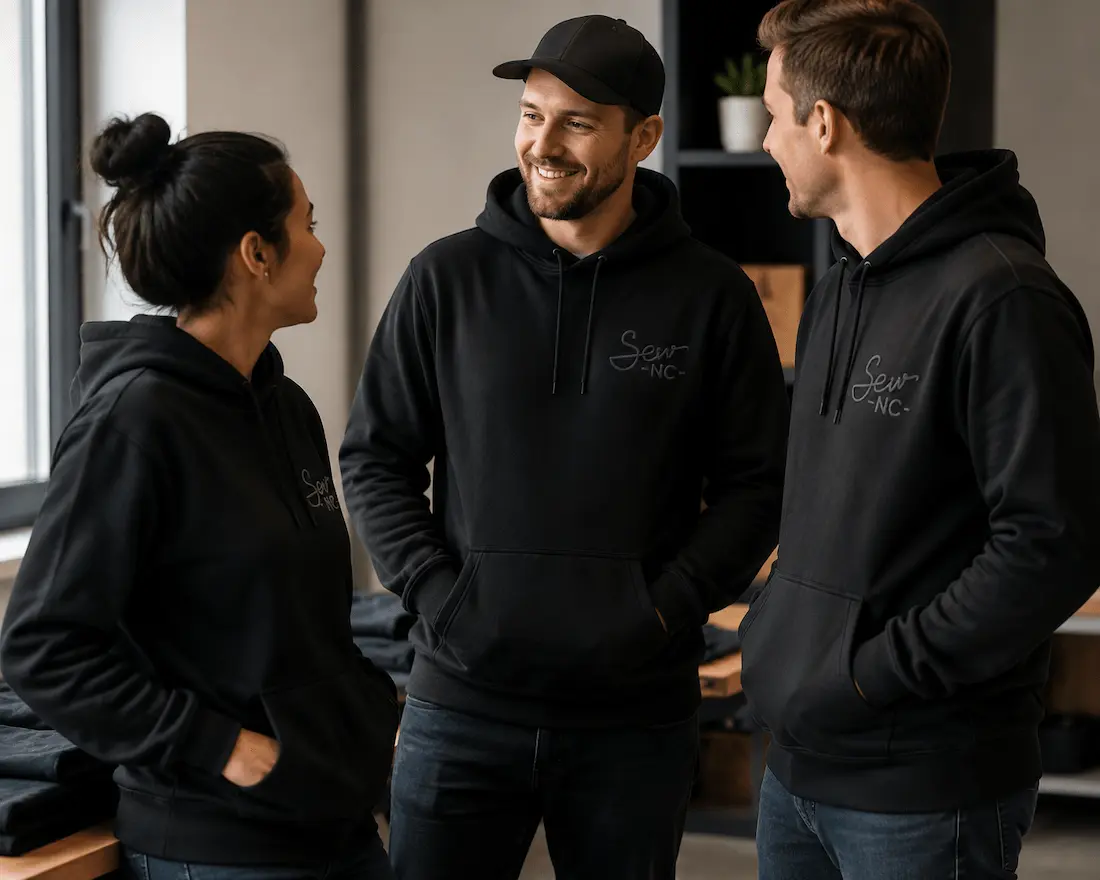
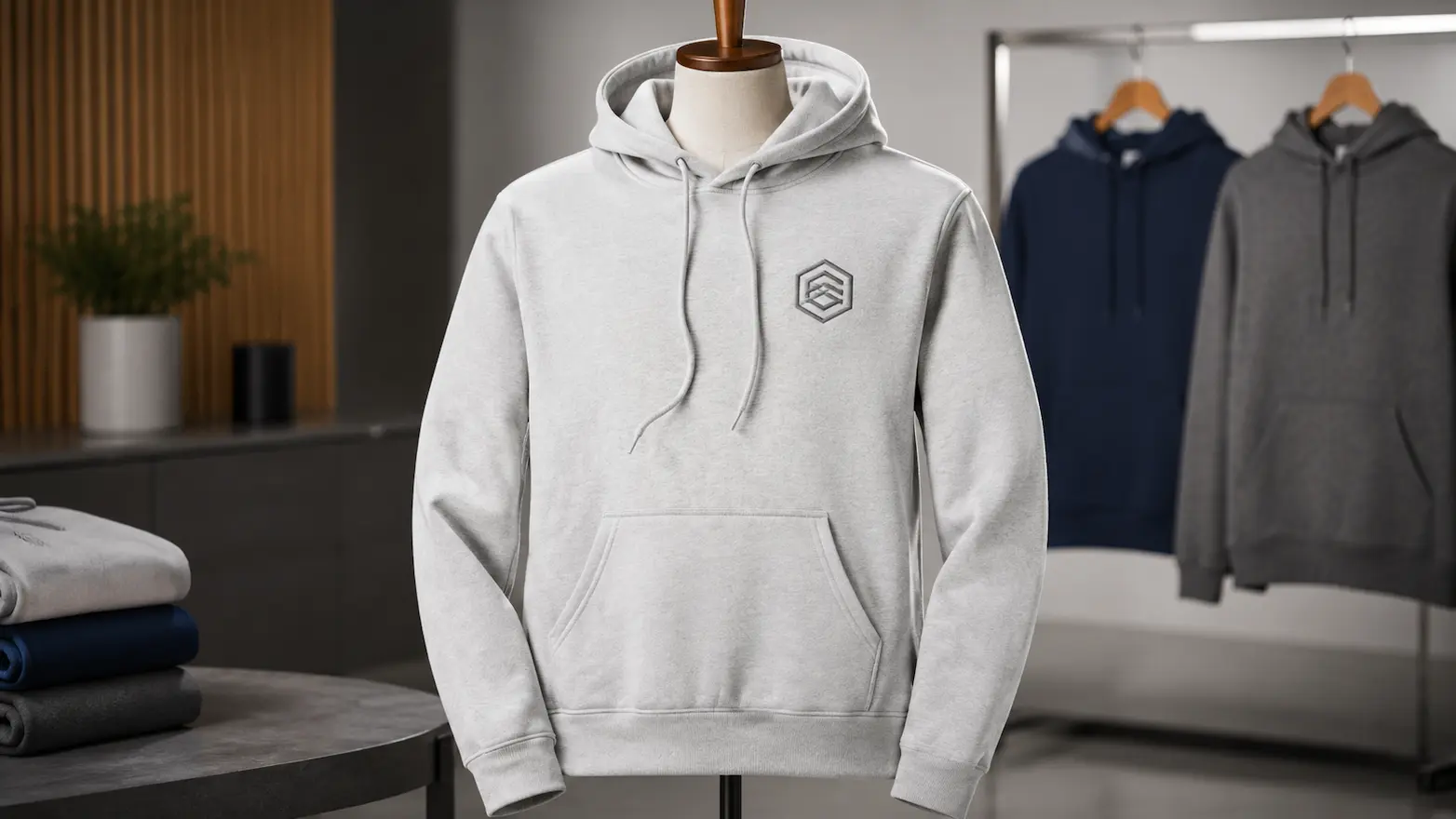
The apparel items that perform best as promotional pieces are the ones people would reach for regardless of the branding. A well-made hoodie in a color someone actually wants to wear, with a clean embroidered logo that does not dominate the garment, is something a recipient puts on because it is comfortable and looks good. The brand visibility follows automatically from a choice the recipient makes independently.
For local businesses whose customers live and work in the same area the brand serves, apparel is a particularly efficient promotional vehicle. A customer wearing a local brand’s hoodie at a weekend farmers market or a school pickup line is generating impressions among exactly the people the business is trying to reach.
That kind of organic community presence is nearly impossible to manufacture through paid channels and relatively straightforward to build through apparel people genuinely want to wear.
T-shirts for events, hoodies for seasonal staff recognition, hats for client gifts, and branded outerwear for organizational programs all produce sustained impressions across a season or longer when the product quality supports it.
Headwear and the Visibility Advantage
Hats and beanies sit at eye level in public spaces. That is the most straightforward explanation for why headwear consistently ranks among the highest-impression categories in custom promotional products. Unlike a logoed pen sitting in a cup on a desk, a hat travels with the person wearing it into every context their day involves.
Structured baseball caps with embroidered logos are the most durable and professionally finished headwear option available in the promotional category. The structured front panel provides a stable surface for embroidery, the logo registers consistently across every unit in a run, and the finished product communicates intentionality rather than incidental branding.
For client gifts, employee recognition programs, and community-facing campaigns, a well-made embroidered cap in the brand’s primary color is a product that stays in use across multiple seasons.
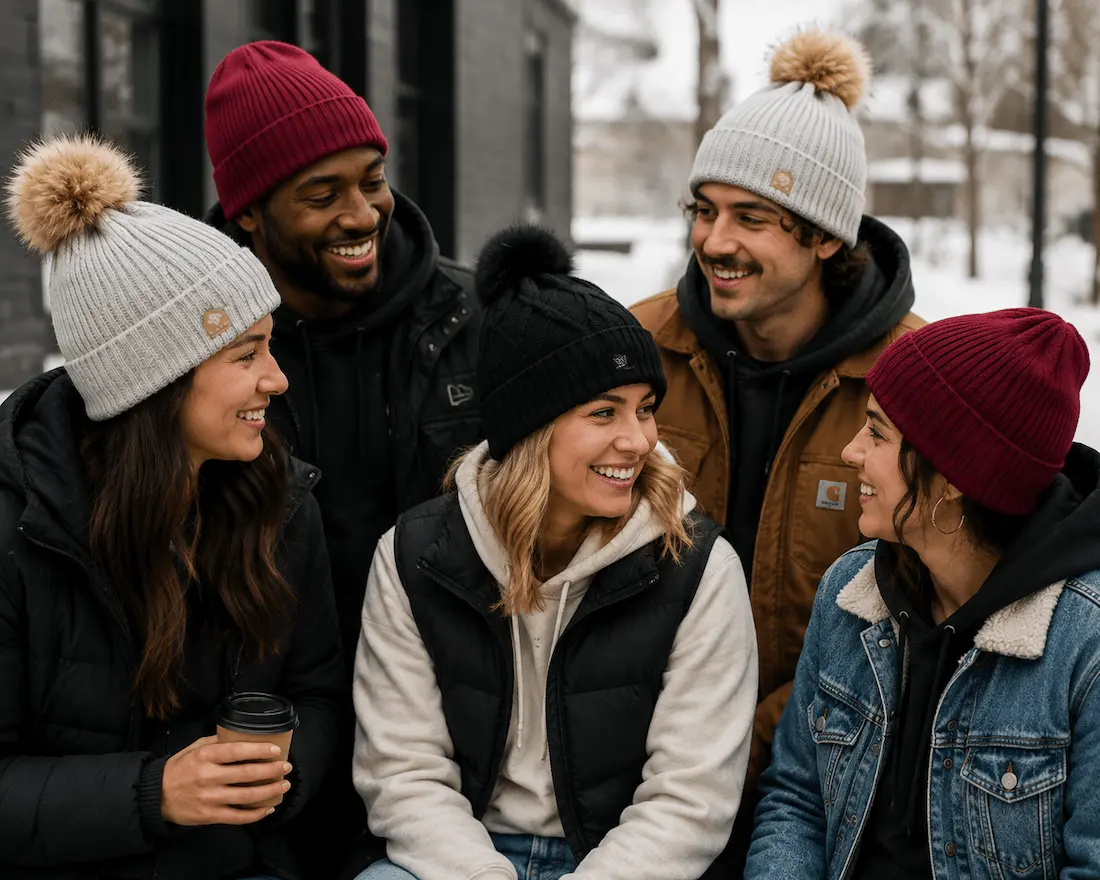
Beanies make particular sense for businesses operating in climates with real winters. A beanie worn daily from November through March generates sustained impressions over a period that most promotional campaigns would never sustain on their own. For nonprofits whose supporters wear branded beanies at winter community events, the visibility generated is organic, repeated, and geographically concentrated in exactly the area the organization is trying to build presence in.
Trucker hats and dad hats work well for brands whose personality runs more casual and approachable. When that tonal match is right, the promotional item feels native to the context rather than grafted onto it, which is part of what determines whether someone keeps wearing it after the initial novelty fades.
Bags and Totes: Functional Merchandise That Travels
The promotional value of a bag is entirely tied to how often the recipient uses it, and that frequency is entirely tied to whether the bag is actually practical for something the recipient does regularly. A well-made canvas tote used for grocery runs, weekend markets, or gym trips generates a public impression every single time. Over a year of weekly use, the number of organic impressions a single tote produces is difficult to match with any other item in the same price range.
Branded backpacks and drawstring bags are particularly effective for youth programs, school organizations, and sports teams because the recipient carries them into exactly the community settings where the brand needs visibility. A youth soccer team carrying matching branded bags to practices and tournaments generates awareness among parents, coaches, and community members across an entire season without any additional effort from the organization.
For corporate custom promotional products distributed at conferences, recruiting events, or client onboarding, a useful branded bag continues generating impressions long after the event that created it. The bag travels into environments the brand might otherwise have no presence in, and it does so every time the recipient picks it up without thinking about it.
Drinkware and Items Built Into Daily Routines
The custom promotional products that generate the most sustained impressions share one characteristic: it fits inside a routine the recipient already has. Drinkware is one of the clearest examples of this. A quality insulated tumbler or travel mug with a clean logo appears on desks, in car cupholders, at gyms, and at coffee shops. That daily circulation reaches a different audience every day across an extended period.
The word quality matters more in drinkware than buyers sometimes account for at the selection stage. A poorly insulated cup that fails to keep beverages at the right temperature gets replaced quickly and takes the brand visibility with it. A well-made drinkware item stays in rotation for years, generating impressions across the entire duration.
Branded notebooks and journals occupy a similar position for audiences that take notes in meetings, at events, or in academic settings. For professional services firms, real estate companies, and consulting businesses whose clients interact with them in formal settings, a quality logoed notebook carries the brand into every meeting where it appears.
That kind of repeated, contextually relevant exposure is what promotional merchandise is supposed to generate, and it rarely happens with items that are not genuinely useful.
At Sew NC, the conversation about custom promotional products starts with who is receiving them and what they actually need, not with what fits a per-unit budget target. Our promotional products services cover apparel, headwear, bags, drinkware, and branded merchandise for local businesses, nonprofits, and organizations across the region.
Company Merchandise for Internal Programs
Branded merchandise for employees serves a fundamentally different purpose than items distributed externally, and the selection criteria should reflect that difference. Staff merchandise is about belonging, recognition, and identification with the organization.
The items that land well in internal programs are the ones that communicate genuine investment in the people receiving them. A quality hoodie, a well-made jacket, or a durable branded bag says something different about how the organization values its team than a logoed keychain or a stress ball does. That distinction is not subtle to the person receiving it.
Onboarding merchandise creates a first-day experience that sets a tone. A new hire who receives a quality branded hoodie and a clean logoed hat on their first day begins the job with a different impression of the organization than one who receives a plastic bag with a pen and a lanyard. The brand that shows up well at that moment earns a kind of goodwill that no amount of subsequent messaging can manufacture.
Recognition programs built around branded merchandise work best when the item is something the recipient actually wants. Asking, rather than assuming, produces merchandise that gets used and generates the internal goodwill the program was designed to create. The best custom promotional products for a field crew are not the same as the best ones for an office team, and treating them the same way produces a program that satisfies no one particularly well.
Merchandise for Events and Community Outreach
Event merchandise is a different category from standard giveaway items because the item carries an emotional association with the occasion it came from. A well-designed event t-shirt or a branded hat becomes part of how participants remember the experience, and that memory attaches to the brand every time the item is used afterward.
For fundraisers, community races, and school or church events, the apparel that participants wear during and after the event is the most visible and sustained form of brand presence the organizing body can create. A shirt worn to the grocery store six months after the event generates an impression that a digital post from the same day never will.
For recruiting events and career fairs, the merchandise distributed to prospective employees communicates something about organizational culture before a single conversation takes place. A quality item signals that the organization pays attention to how it presents itself. The opposite signal is just as clear and considerably harder to walk back in a first-impression context.
Community outreach programs that use branded merchandise as part of their engagement strategy benefit most from items that fit the specific community context. Branded water bottles for a neighborhood cleanup, logoed hats for a community garden program, or custom t-shirts for a local charity run feel like genuine contributions to the occasion rather than advertising vehicles dropped into a community setting.
That distinction between contribution and advertisement is something recipients sense, and it affects whether the brand association generated is positive or merely neutral and also the custom promotional products.
Choosing Custom Promotional Products That Actually Work
The selection process is where the return on a promotional merchandise investment is largely determined, and most of the decisions that lead to merchandise nobody uses were made before a single item was ordered.
Durability is the variable most underweighted under budget pressure. An item that holds up through two years of regular use generates a fundamentally different return than one that fails within a few months, and the cost difference between those two products is almost never as large as the difference in return suggests it should be.
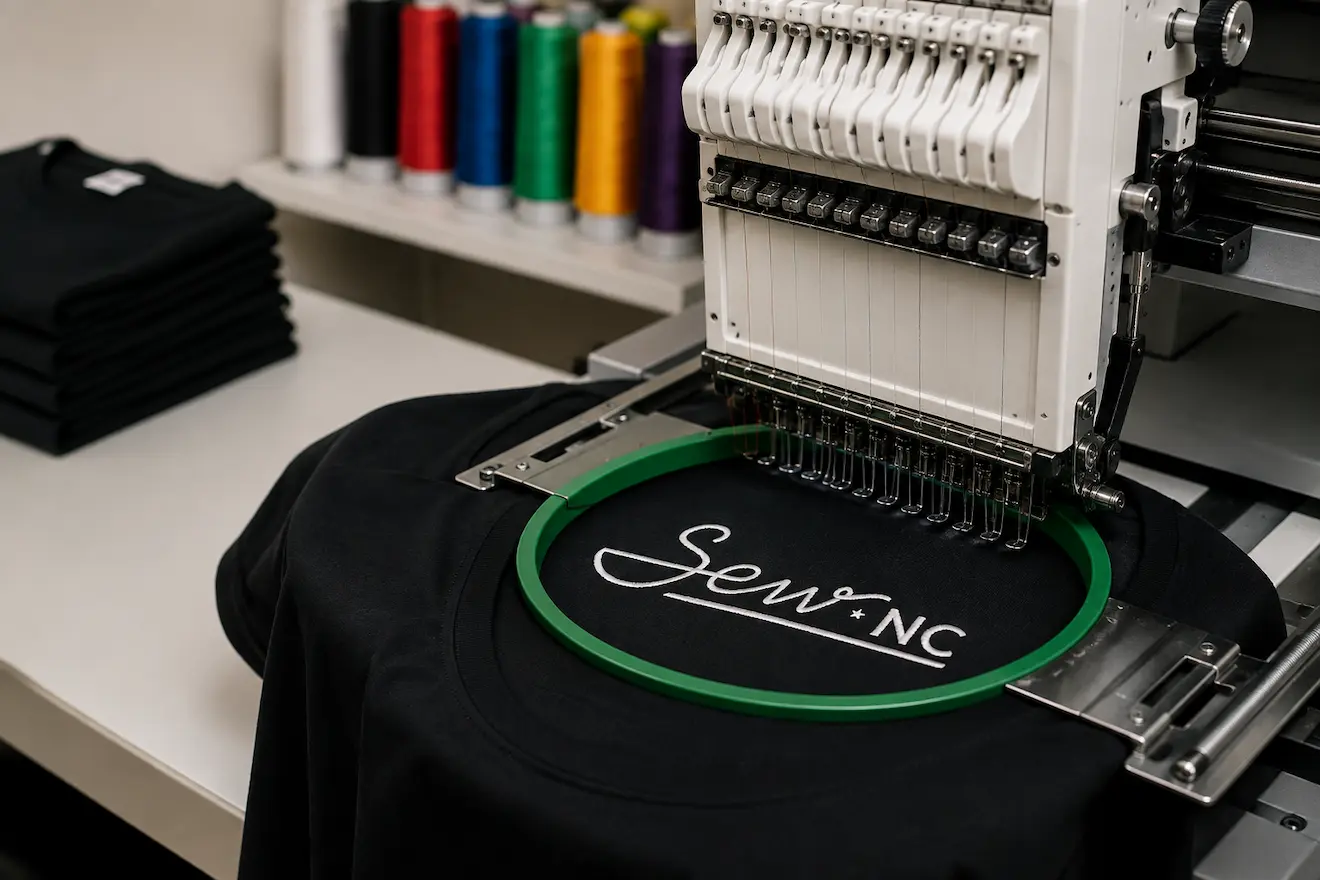
Decoration quality is the other factor that determines whether a branded item builds recognition or erodes it. A clean, correctly sized logo applied with the right method for the product surface communicates that the brand was taken seriously. A crooked print, a peeling transfer, or an embroidered logo that lost its definition before the first wash communicates something the brand never intended to say.
Reach out through the Sew NC contact page to plan custom promotional products that fit your audience, your occasion, and the standards your brand is trying to uphold. Merchandise that people keep and use is the goal, and that goal is achievable with the right selection process behind it.