Promotional items live or die in the first week. Either something lands on a desk and stays there, or it slides into a junk drawer next to old chargers and takes the logo down with it. That’s the whole test, and most orders fail it before a single item ships.
A rep pitches whatever’s cheapest, someone approves it under deadline pressure, and three hundred units of the same forgettable thing show up in a box. Nobody stops to ask what a trade show visitor actually wants versus what a new hire wants versus what a loyal client deserves, even though those are three completely different answers.
This guide breaks down promotional items by who’s really receiving them, walks through apparel against drinkware against the smaller stuff, and covers the budgeting and timing that keeps an order from turning into a scramble two weeks before it’s due.
Sew NC puts these orders together for businesses, schools, and nonprofits all over Winston-Salem and the Triad, and the ones that stick around start with one blunt question before anyone picks a product: who’s holding this thing, and do they want it.
The Test Every Promotional Item Has to Pass
Call them custom promotional products, call them promotional products, call them swag, the label doesn’t change the math. Would a person grab this off a shelf with their own money? A solid tumbler, a well-cut tote, a hoodie with a logo small enough to forget it’s there, all pass. A wobbly pen or a stress ball that’s already lost its shape in the box rarely does, no matter the order size.
Budgets tend to reward the wrong number here. Half the quantity in something people keep beats double the quantity in something that hits a trash can before the parking lot empties out. A spreadsheet loves the cheaper unit cost, but six months later a closet full of unclaimed giveaways has quietly cost more than the nicer option ever would have. That’s the trap most promotional items orders fall into: the math looks great on the invoice and terrible six months later.
Matching Promotional Items to the Moment They’re Meant For
A booth giveaway, a new hire’s welcome box, and a thank-you sent to a longtime client have almost nothing in common, even when the exact same logo ends up on all three. Grouping every promotional item’s decision under one blanket plan is how a company ends up with a warehouse of mismatched leftovers instead of three programs that each do their job well.
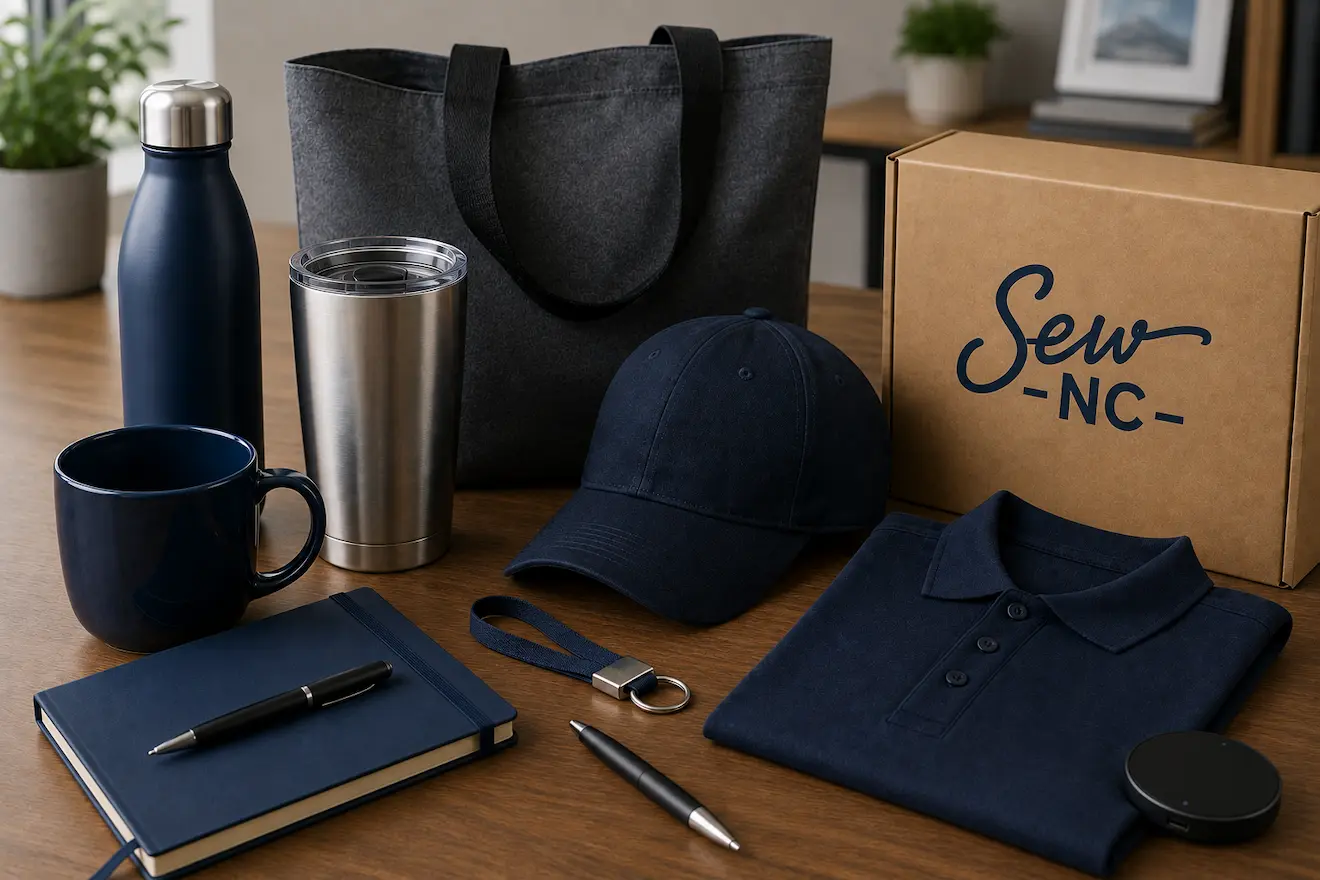
With trade show tables, attendees are hauling a growing pile of swag by lunchtime, so anything bulky loses before it’s even out of the bag. Drawstring bags, phone grips, and a lightweight water bottle, these travel well and don’t add weight to a day already full of walking.
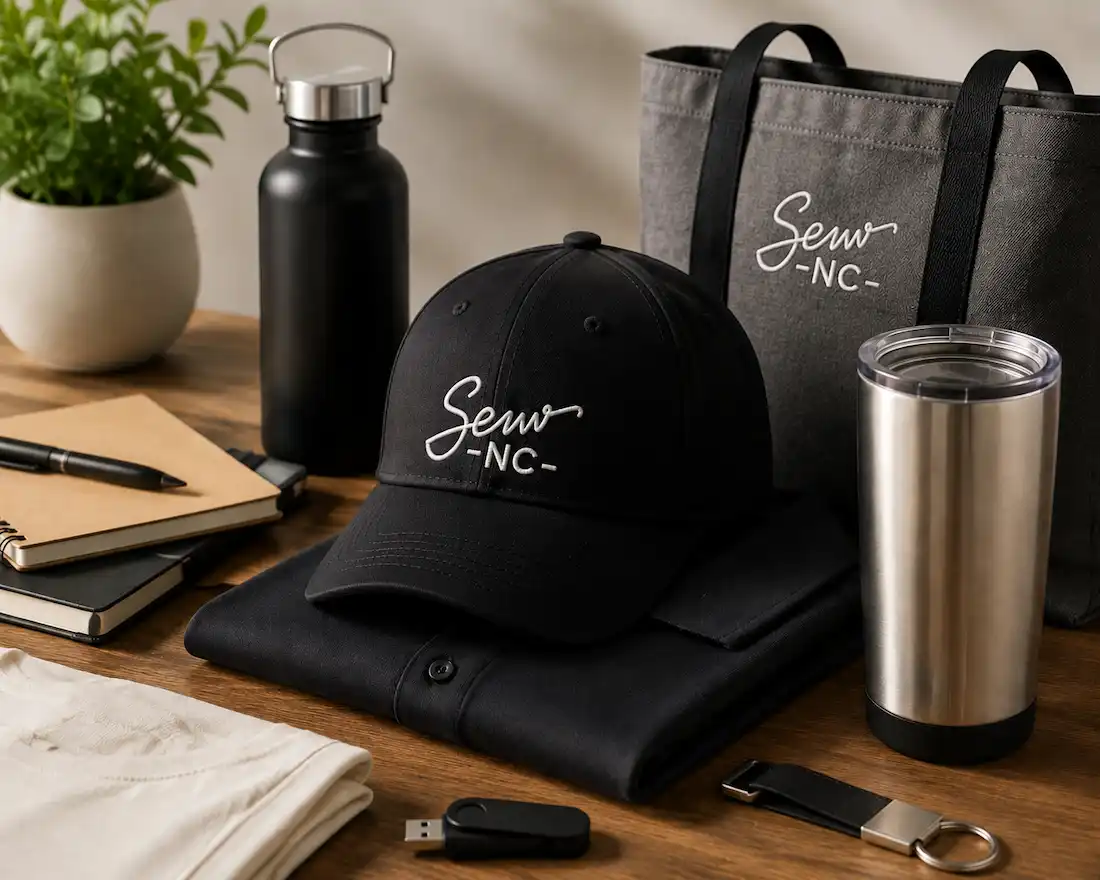
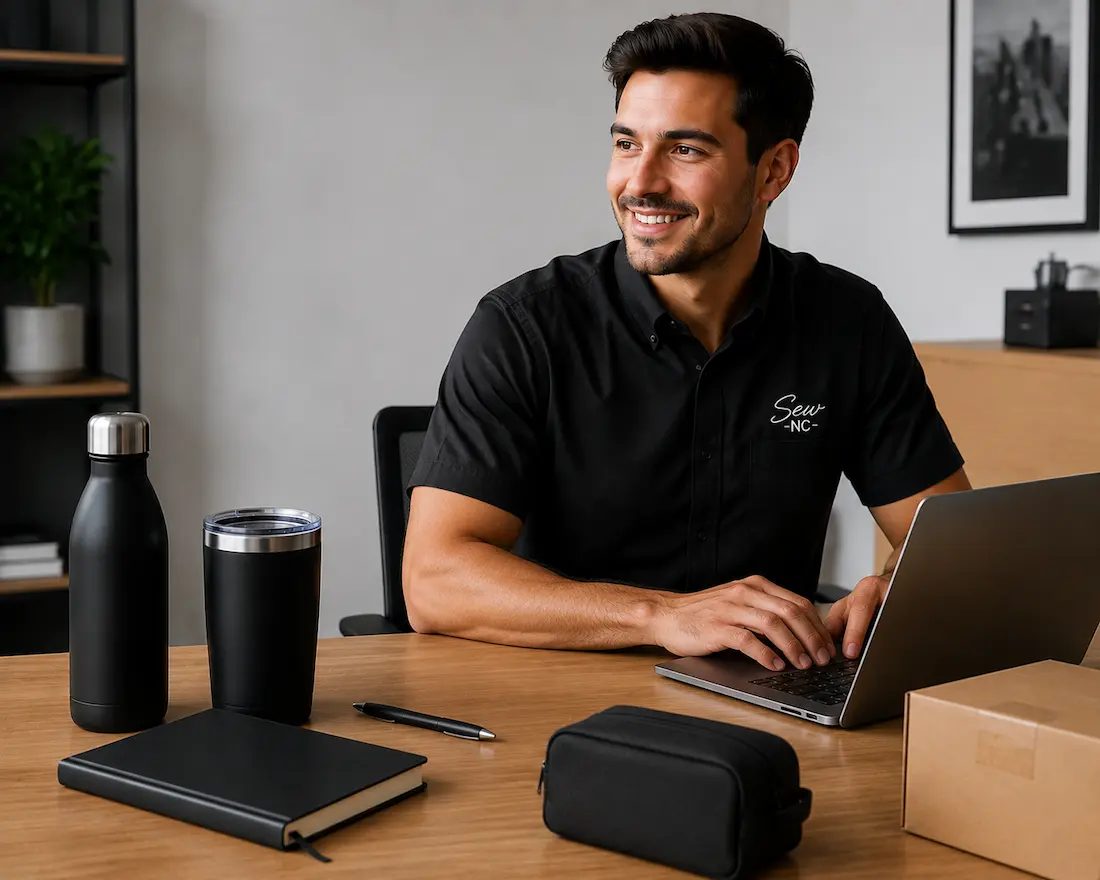
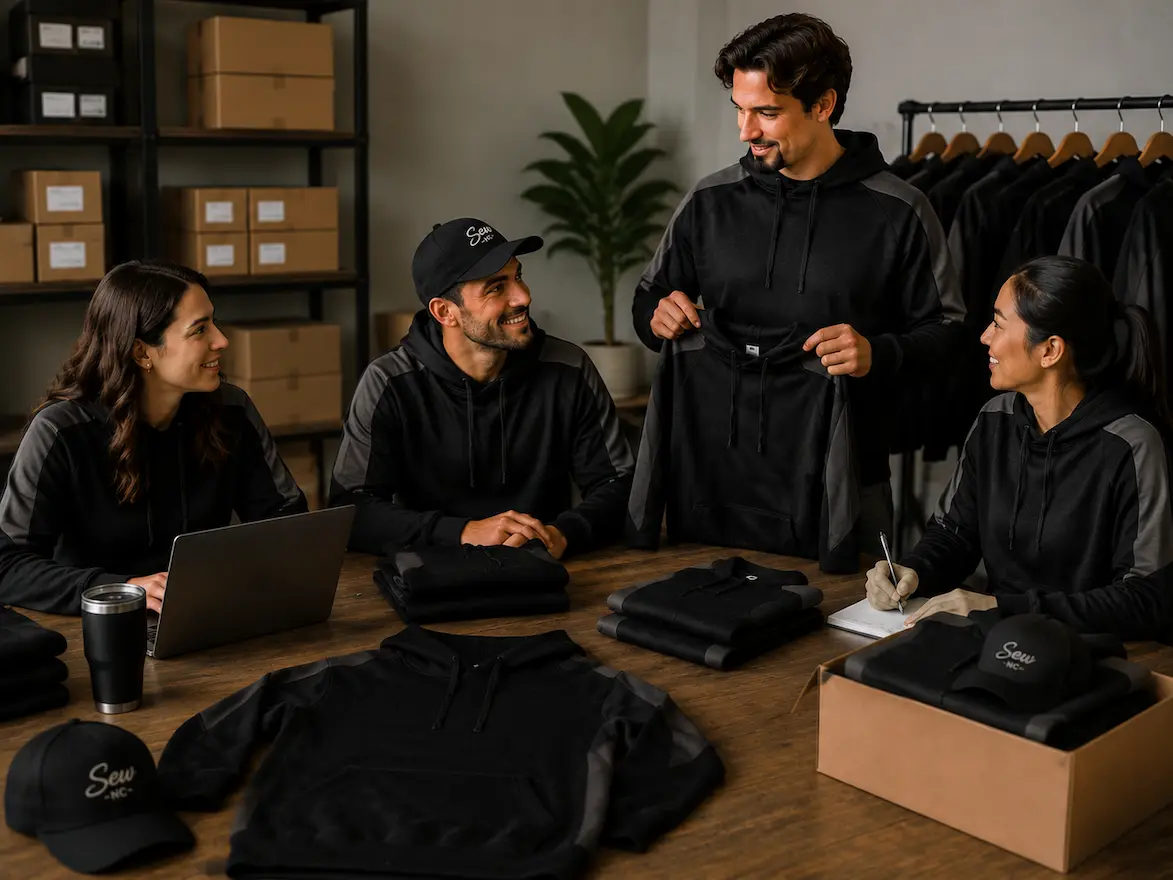
Also, welcome gifts and client thanks. A new hire or a valued client notices the difference between something ordered in bulk and something picked out. A better notebook, a tumbler with some actual weight to it, a small piece of apparel in a color nobody’s seen on the daily uniform, all read as intentional rather than automatic.
And desk staples like mugs, pens, and notepads earn attention slowly, through being seen fifty times instead of once. These land best with people already at a desk every day, staff and repeat clients, not a crowd that walks past a booth for thirty seconds.
Apparel, Drinkware, and Everything Smaller
Three broad buckets cover almost every promotional item order, and each one earns its keep differently.
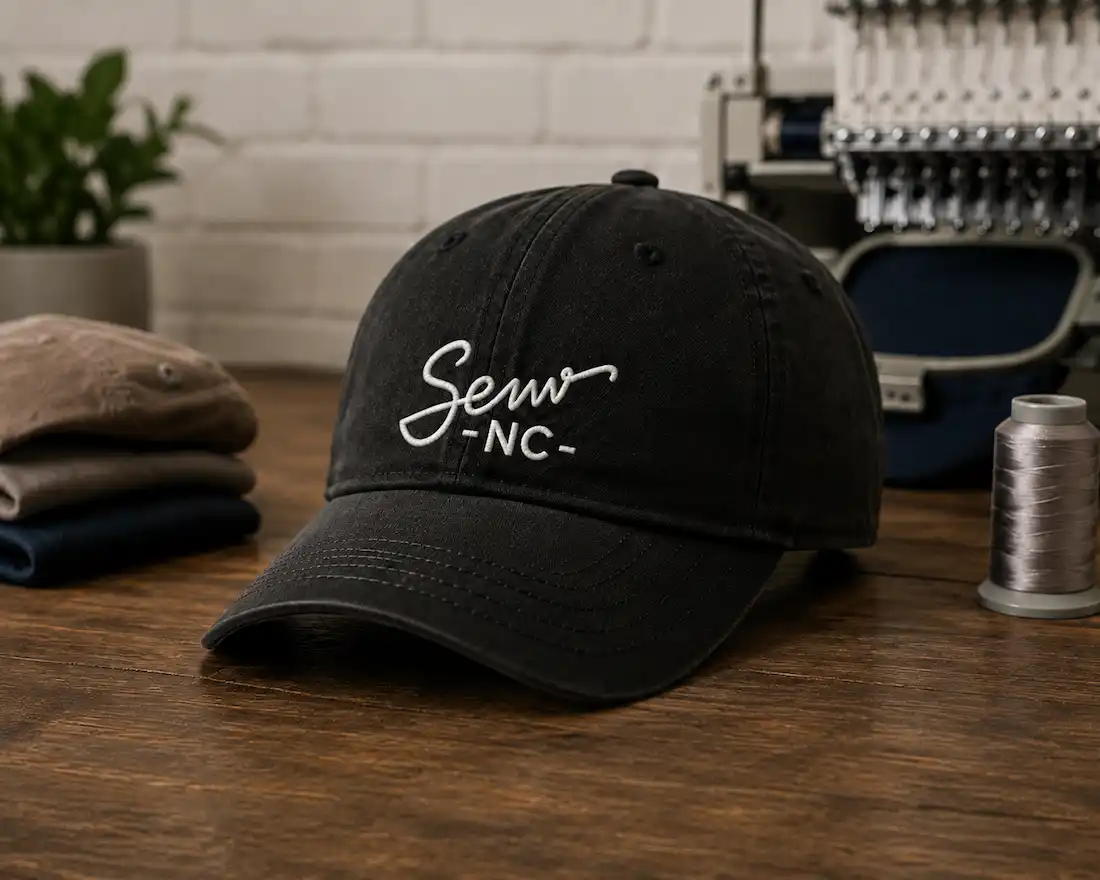
Apparel walks around in public long after the person who received it forgot they had it on. That extra mileage costs more per piece than a small accessory, but a hoodie or polo someone actually reaches for keeps representing the brand for years, not days. Save the higher price tag for people likely to wear it often: staff, board members, repeat clients, not a general crowd passing a table once.
Drinkware sits comfortably in the middle. A tumbler that survives a car cupholder and a dishwasher earns daily use, and laser engraving holds its edge for years without fading, chipping, or wiping off the way a printed logo eventually does. Sew NC engraves drinkware in-house, so the mark stays permanent instead of turning into a smudge after enough trips through the dishwasher.
Pens, notepads, and phone stands cost the least per unit, and they’re the right call for a table full of strangers who each need one thing to remember a booth by. They earn a spot in the mix, just not as the only thing in an order meant to build lasting recognition.
- Apparel for visibility that lasts years, not one afternoon
- Drinkware for daily desk or car use with branding that survives wear
- Small accessories for volume events where reach outweighs longevity
Choosing How the Logo Gets Applied
Material dictates method more here than almost anywhere else in branded merchandise.
Screen printing and embroidery handle apparel and bags without much debate, while laser engraving takes over for metal and hard plastic drinkware that neither of those methods suits well. A printed logo on a curved bottle distorts fast or peels within a season, which is exactly why drinkware defaults to engraving whenever the piece is meant to last.
Placement carries its own weight, too. A flat surface, a shirt front, a bag panel, a tumbler face, holds a design far better than anything wrapped around a curve or crammed into a tight corner. Trim the design down before it ever touches a small or curved item, since shrinking a busy logo rarely produces a clean result.
- Screen print or embroider apparel, bags, and flat fabric
- Reserve laser engraving for metal and hard plastic pieces built to last
- Simplify anything going onto a curve, regardless of method
Sew NC proofs every item before production starts, catching a logo that won’t translate to a curved surface or a tiny accessory long before it becomes a finished box of items nobody wants. A brewery client learned this the hard way on a first pint glass order, approving a detailed crest from a flat file that turned muddy once it wrapped around the glass; the second run, simplified and proofed properly, came out sharp.
Budgeting for Promotional Items Across Categories
Unit cost drops as quantity climbs, but the curve bends differently depending on category. Apparel and drinkware both hit real price breaks around fifty and again near a hundred units, while small accessories often need several hundred before the number moves much at all.
Splitting a budget across categories usually stretches further than pouring everything into one item for the whole list. A smaller run of quality drinkware for staff and clients paired with a bigger, cheaper run of accessories for the trade show floor often covers more ground than one item ordered at a single quantity for everybody.
- Save premium items for the smaller, higher-value audience
- Lean on cheap accessories for volume events built on reach
- Price out each category separately, since apparel, drinkware, and accessories rarely follow the same curve
A nonprofit we work with handles this exact split every year: a smaller embroidered run for board members and major donors, a larger batch of low-cost accessories for general attendees, one event budget stretched across two very different jobs. Splitting the plan this way turns one promotional items budget into two programs, each matched to the audience receiving it.
Timing an Order Around the Dates That Actually Push It
A handful of dates on the calendar drive most of these orders, and getting ahead of them beats a rush every single time. Trade show season fills spring and fall with fixed deadlines that never move. Client and staff gifting piles up toward year’s end. Welcome kits, on the other hand, never stop, so keeping a small stock on hand saves a scramble every time someone new starts.
- Trade show season: place the order six to eight weeks out
- Year-end gifting: lock everything in by early November
- Welcome kits: keep a standing supply instead of ordering per new hire
- Launches and grand openings: fold the merchandise timeline into the same plan as signage and apparel
Where Promotional Item Orders Usually Fall Apart
Most problems trace straight back to a handful of choices made long before anyone approves a design.
- Grabbing the cheapest option available instead of matching it to who’s receiving it
- Buying one item for every occasion instead of splitting the budget by use case
- Skipping a proof on anything curved or small where a logo tends to distort
- Treating a single event order the same as an ongoing gifting program
- Chasing quantity over quality, when the opposite usually wins out
Sorting these out early has far less to do with picking a vendor and far more to do with the questions asked before anything gets built. That gap decides whether items stay in circulation for years or land in a donation bin the week after the event wraps.
Whether it’s a trade show table, a client gift program, or something sitting on a desk every day, these choices carry more weight than the artwork itself. Sew NC handles proofing, decoration, and placement on every order before production starts, so what ships is exactly what got approved. Time spent matching the item to the audience beats a bigger order every time.
Build a promotional item list that fits your audience, and receive your quote with us before locking in items, quantities, or a deadline.