Custom hoodies get requested for almost every reason a company orders apparel: a cold-weather staff piece, a client gift that doesn’t feel like a work shirt, a fundraiser item people actually keep wearing years later. That range is exactly why picking the right one takes more thought than picking a color and a logo size.
Most orders go sideways at the decoration method, not the hoodie itself. Someone falls in love with a mockup, skips the question of embroidery versus print, and finds out three weeks later that the design doesn’t hold up the way they expected on thick fleece.
This guide walks through choosing a cut, a decoration method, and a fabric weight that matches how the hoodie gets worn, plus the sizing and timing habits that keep a bulk order from turning into a last-minute scramble.
Sew NC builds these orders for businesses, schools, and nonprofits across Winston-Salem and the Triad every week, and the ones that go smoothly start with a clear answer to one question before anything gets designed: how often will this hoodie actually get worn. That single question shapes almost every decision that follows.
What Makes Custom Hoodies Worth the Cost
Custom hoodies aren’t just t-shirts with sleeves added on. Heavier fabric, a bigger branding surface, and a higher price point all change the math compared to a tee, so the decisions around decoration and fit matter more here than almost anywhere else in branded apparel.
Done right, good custom hoodies earn their cost twice over. They read as a real gift or a real piece of team gear rather than a work requirement, and they survive enough washes that people are still wearing them a year or two after the order shipped.
Pullover, Full-Zip, or Quarter-Zip: Picking the Right Cut
The cut changes more than the look. It changes where a logo sits, how the fabric drapes, and whether the piece works for daily wear or gift-giving. Getting this choice right before the design conversation even starts saves a round of revisions later.
A pullover is the most requested style for gifts and giveaways, because it feels casual and comfortable without doubling as a work uniform. A full-zip hoodie works better for daily staff wear, because it layers easily over other clothes and doesn’t need to go over someone’s head in a meeting. A quarter-zip splits the difference for teams that want something a bit more polished than a pullover but less bulky than a full zip.
- Pullover hoodies for gifts, giveaways, and fundraiser apparel
- Full-zip hoodies for staff who layer them daily over other clothing
- Quarter-zip for a more polished look that still feels casual
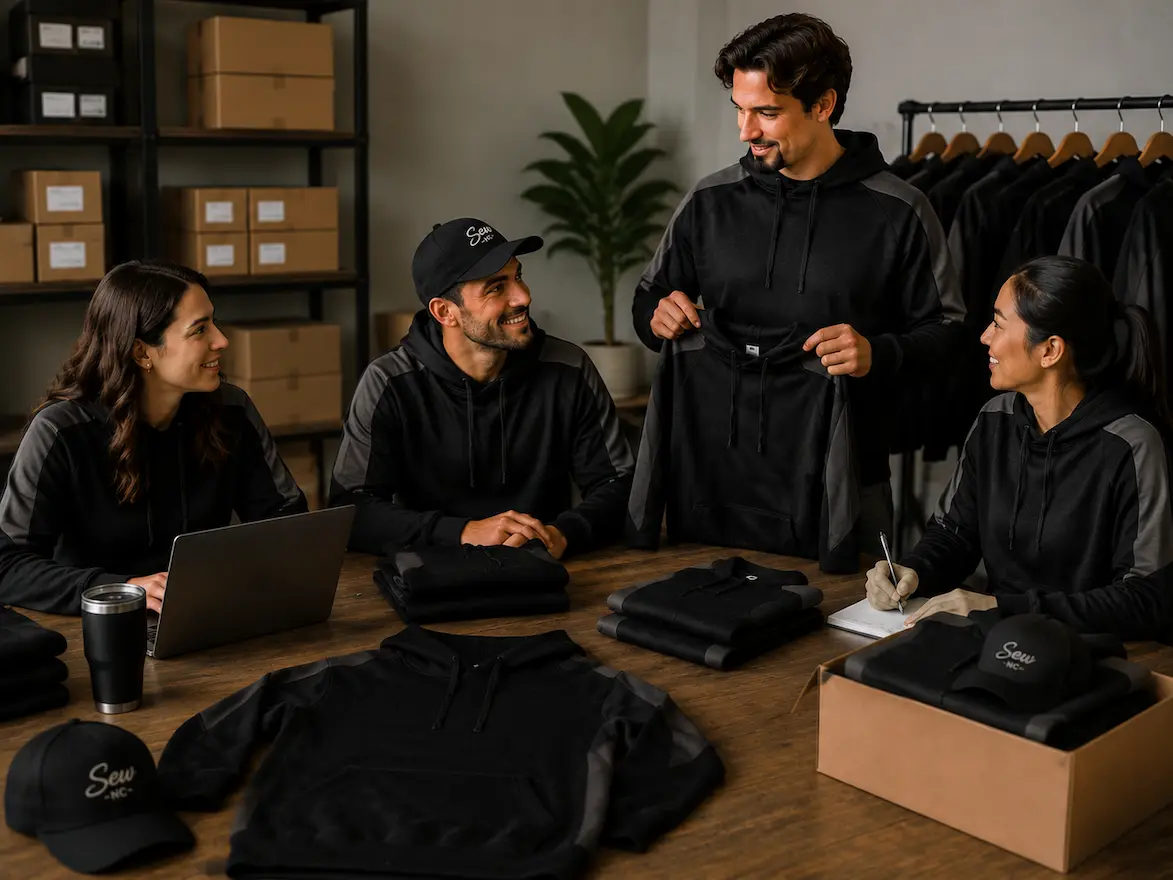
A marketing agency in Winston-Salem splits their custom hoodies this way every year: pullovers in a seasonal color for client gifts, full-zips in the core brand color for staff who wear theirs at their desks through the winter.
Embroidery, Screen Printing, or Heat Transfer
This decision affects cost, durability, and how the finished hoodie looks more than any other choice in the order.
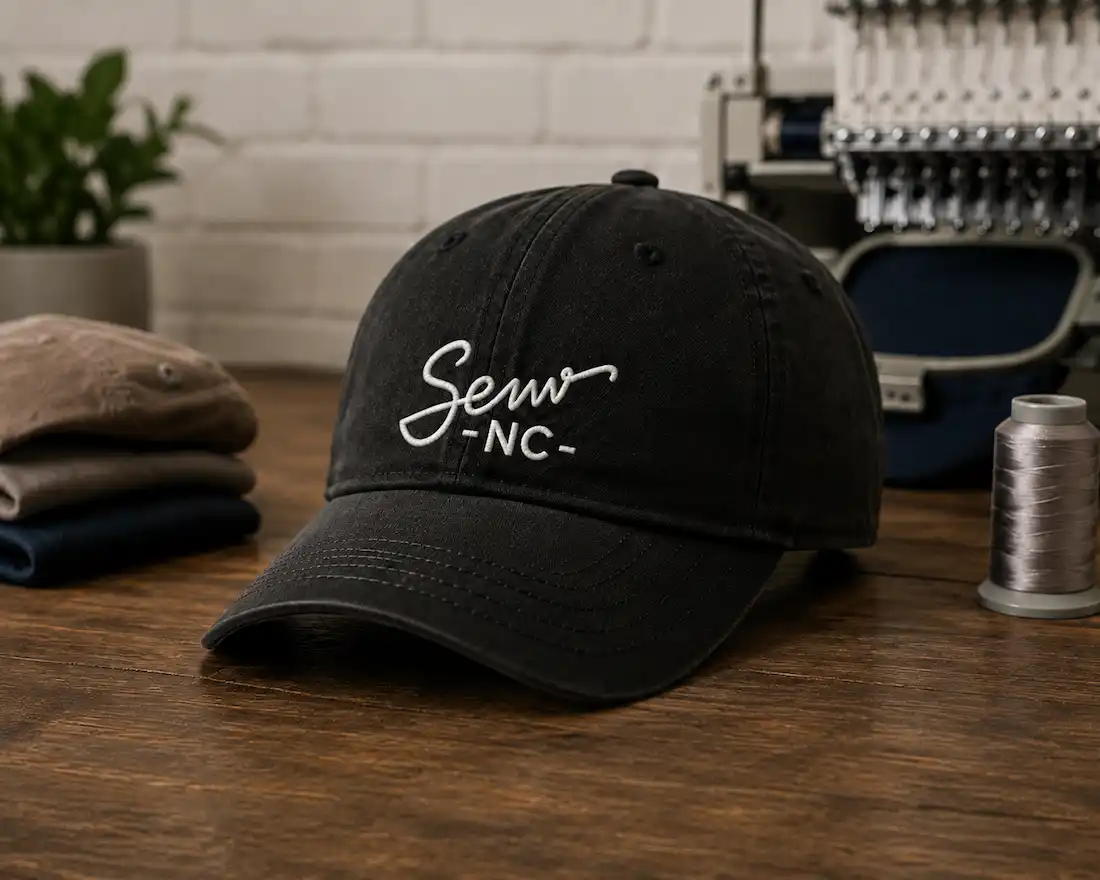
Embroidered hoodie designs hold up the longest. Stitching doesn’t crack or peel the way a printed graphic eventually does, which matters for anything meant to stay in rotation for more than a season. A small, left-chest embroidered logo works especially well on a hoodie chest or a quarter-zip collar, because it reads as intentional rather than slapped on.
Screen printing costs less at volume and handles larger, more colorful designs better than embroidery does. A full front graphic or a design with several colors usually makes more sense printed than stitched, because embroidery gets expensive and visually busy past a certain level of detail.
Heat transfer sits in between: faster and cheaper than embroidery for small runs, but it doesn’t last through commercial washing the way stitching does, so it fits one-time event hoodies better than daily wear pieces.
- Choose embroidery for anything worn regularly over a year or more
- Choose screen printing for large, colorful designs or bigger one-time runs
- Reserve heat transfer for short runs or single-event hoodies
Sew NC embroiders and prints custom hoodies in house, sending a proof for approval before production starts so the thread color or print detail gets caught before it becomes a finished batch nobody’s happy with.
Client Gifts Versus Staff Hoodies
A custom hoodie meant as a client gift and one meant for daily staff wear rarely call for the same decisions. A gift reads better in a color outside the everyday branding, with a smaller, subtler logo that feels chosen rather than issued. A staff hoodie can lean into the core brand color and a bolder placement, because it’s meant to be recognized from across a room instead of admired up close.
- Client gifts: a color outside the standard lineup, subtle branding, heavier fabric
- Staff hoodies: core brand color, clear left-chest logo, fabric matched to daily use
- Fundraiser hoodies: somewhere in between, visible branding but still wearable well past the event
Fabric Weight and Fit People Actually Keep Wearing
A hoodie that’s too thin feels cheap, and one that’s too heavy for the climate ends up folded in a drawer nine months of the year. Matching fabric weight to how the hoodie gets used matters more than most orders account for upfront.
A midweight fleece works for most climates and most uses, layering well without feeling bulky. A heavier weight makes sense for outdoor teams or colder regions, while a lighter option suits gift-giving in warmer months or year-round indoor wear.
- Midweight fleece covers most general-purpose orders well
- Heavier fabric for outdoor staff or consistently cold environments
- Lighter fabric for gifts, giveaways, or warmer-climate teams
Wholesale Hoodies: What Changes at Real Volume
Wholesale hoodies behave differently than a small order scaled up. Price breaks kick in at specific quantities, and decisions that barely matter at a dozen pieces, color count, decoration method, fabric choice, start affecting the total meaningfully once an order hits fifty or more.
Most wholesale hoodie pricing improves noticeably somewhere between twenty-five and fifty units, with another step down past one hundred. Simplifying the design, one logo location instead of two, one thread color instead of four, protects the per-unit price at that kind of volume far more than negotiating on the unit itself does.
- Ask about quantity breaks before finalizing a headcount
- Keep decoration simple to protect per-unit pricing at scale
- Budget a small buffer for reorders instead of treating the order as a single purchase
A hundred-piece hoodie order and a fifty-piece order often land closer in per-unit cost than people expect, because a lot of the setup cost gets spread across the run either way. It’s worth asking about the next price break before finalizing a headcount that falls just short of it.
Sizing Custom Hoodies Without the Back-and-Forth
Hoodie sizing runs bulkier than a tee, and guessing based on t-shirt sizes usually comes back wrong. Someone who wears a medium tee often needs a large hoodie to layer comfortably, and that gap catches a lot of first-time orders off guard.
Collect sizes directly from the actual group wearing the hoodies whenever a list exists, whether that’s staff, students, or event registrants. For public giveaways without individual sizing, skew the order toward mid-range and large sizes instead of splitting evenly across the full range.
- Pull sizes from the actual group, not estimates based on tee sizing
- Skew quantities toward mid and large sizes for public or unknown audiences
- Request a fit sample before finalizing sizes on a first-time order
Timing Custom Hoodies Around the Calendar
A handful of dates drive when most custom hoodies get ordered across the Triad, and getting ahead of them beats scrambling once the deadline arrives. Cold-weather staff apparel and holiday gifting both spike from October through December, often with less lead time than teams expect once the season gets busy. Back-to-school and fall sports pull in a wave of orders for booster clubs and school groups. Company anniversaries and client gift programs tend to land whenever the milestone falls, so the design work should start well before the date on the calendar, not the week of it.
- Cold-weather staff orders: submit designs by early October to beat the seasonal rush
- Holiday gifting: lock in sizes and colors three to four weeks before the event
- Back-to-school and fall sports: confirm quantities before the first week of August
- Anniversaries and milestones: settle the design early if a specific detail needs stitching in
Common Mistakes When Ordering Custom Hoodies
Most problems with custom hoodies trace back to a handful of decisions made before production starts.
- Picking a decoration method based on a mockup instead of how the hoodie will really get worn
- Choosing a logo too detailed for a small embroidered placement
- Guessing sizes off t-shirt sizing instead of collecting them directly
- Ordering exact headcount with no buffer for new hires or damaged pieces
- Treating custom sweatshirts and hoodies as a one-time order instead of an ongoing program with built-in reorders
- Assuming a staff hoodie and a client gift hoodie should look identical, when the two often call for different colors and logo choices
Getting these right early has less to do with the vendor and more to do with the questions asked before the order gets placed. That gap is usually the difference between a hoodie a team wears for two winters straight and one that ends up folded at the bottom of a closet by spring.
Whether it’s staff apparel, a client gift, or a fundraiser giveaway, these details end up mattering more than the design itself. Sew NC handles proofing, sizing, and decoration decisions on every order for custom hoodies before production starts, so what shows up matches what got approved. A little planning around cut, decoration, and fit goes further than a bigger budget ever does.
Plan a custom hoodie order your team will actually wear, and get a quote from our team before locking in sizes, colors, or a deadline.