Work uniforms earn their keep in a way office apparel never has to. Nobody’s judging a polo on how it photographs at a trade show. They’re judging it on whether it survives a ten-hour shift, a spill, a hundred washes, and still looks like it belongs to a real company on day two hundred.
Most businesses start this process backward. Someone picks a shirt they like, orders fifty, and only discovers three months later that the fabric pills after one wash or the logo cracked by June. The order that holds up starts with the job work uniforms have to do, not the shirt itself.
This guide walks through picking garments for the actual work happening on the floor, what durability really means once wash cycles start piling up, how logo placement holds up differently across roles, and the sizing and reorder habits that keep a uniform program from turning into a monthly headache.
Sew NC builds these programs for shops, restaurants, and service businesses across Winston-Salem and the Triad, and almost every one of them starts with the same conversation: what does this team actually do all day, and what needs to survive that.
What Work Uniforms Have to Do
Work uniforms aren’t corporate casual with a company logo slapped on. They’re functional apparel that gets worn hard, washed constantly, and judged entirely on whether it holds up rather than how it photographs. That distinction changes almost every decision that follows, from fabric weight to how the logo gets applied.
Good work uniforms do two jobs at once. They make a team instantly recognizable to customers, and they survive whatever the job throws at it, grease, weather, repeated bending and lifting, without falling apart by the second month.
For businesses running more than one location, work uniforms do a third job too. They keep every site looking like the same company, even when the manager, the crew, and the local vendor change from one address to the next.
Building Around the Actual Job, Not the Catalog Page
Skip the temptation to pick one shirt for the whole company. A front counter role and a shop floor role need completely different garments, even under the same logo.
Front-Facing Roles
Anyone talking to customers directly, front desk, sales floor, reception, does best in a clean, structured piece. A polo or a button-front work shirt reads as put-together without looking like a costume, and it holds up fine to a normal office-adjacent pace.
Shop Floor and Physical Work
Anyone lifting, bending, or working around equipment needs something built differently. Heavier twill, reinforced seams, and a work shirt or jacket cut for movement beat a standard polo that binds at the shoulders after an hour of real use.
Weather and Seasonal Layers
Outdoor or dock-adjacent teams need a layer built for the season, not just the brand. A lined jacket in January, a breathable long sleeve in July. Matching the color and logo across seasons keeps the team looking consistent even when the garment changes completely.
- Match garments to the actual physical demands of the role, not a company-wide default
- Reserve heavier twill and reinforced seams for roles doing physical work
- Keep colors and logo placement consistent across roles even as the garment style shifts
One auto shop in the Triad splits its uniform this way without overthinking it: counter staff in polos, technicians in heavier twill work shirts, same navy, same left-chest logo on both. Customers see one brand. The shop sees two garments doing two very different jobs well.
A restaurant client runs the same logic front of house versus back of house. Servers wear a lighter, breathable polo built for a fast-paced floor, while kitchen staff wear a heavier, stain-resistant work shirt that survives grease and a commercial washer far better than anything meant for the dining room.
What Durability Actually Means After Fifty Washes
A shirt that looks great on day one and falls apart by month three isn’t cheaper; it’s a second order waiting to happen. Real durability shows up in the stitching, the fabric weight, and how the logo survives repeated washing, not the price tag on day one.
Heavier fabric blends hold their shape and color through commercial laundering far better than lightweight cotton does. Reinforced seams at the shoulders and underarms matter more here than in office apparel, since work uniforms get stretched, pulled, and bent in ways a desk job never demands.
- Choose fabric weight based on wash frequency, not just comfort in the fitting room
- Ask about reinforced stitching at stress points for roles doing physical labor
- Request a worn sample after a few wash cycles before committing to the full order
Stain resistance matters just as much for kitchen, auto, and shop floor roles, where grease and dark stains show up daily. A dark navy or charcoal work uniform hides that wear far longer than a light gray one does, which is worth factoring in before locking a color that looks great on a screen but shows every smudge by lunch.
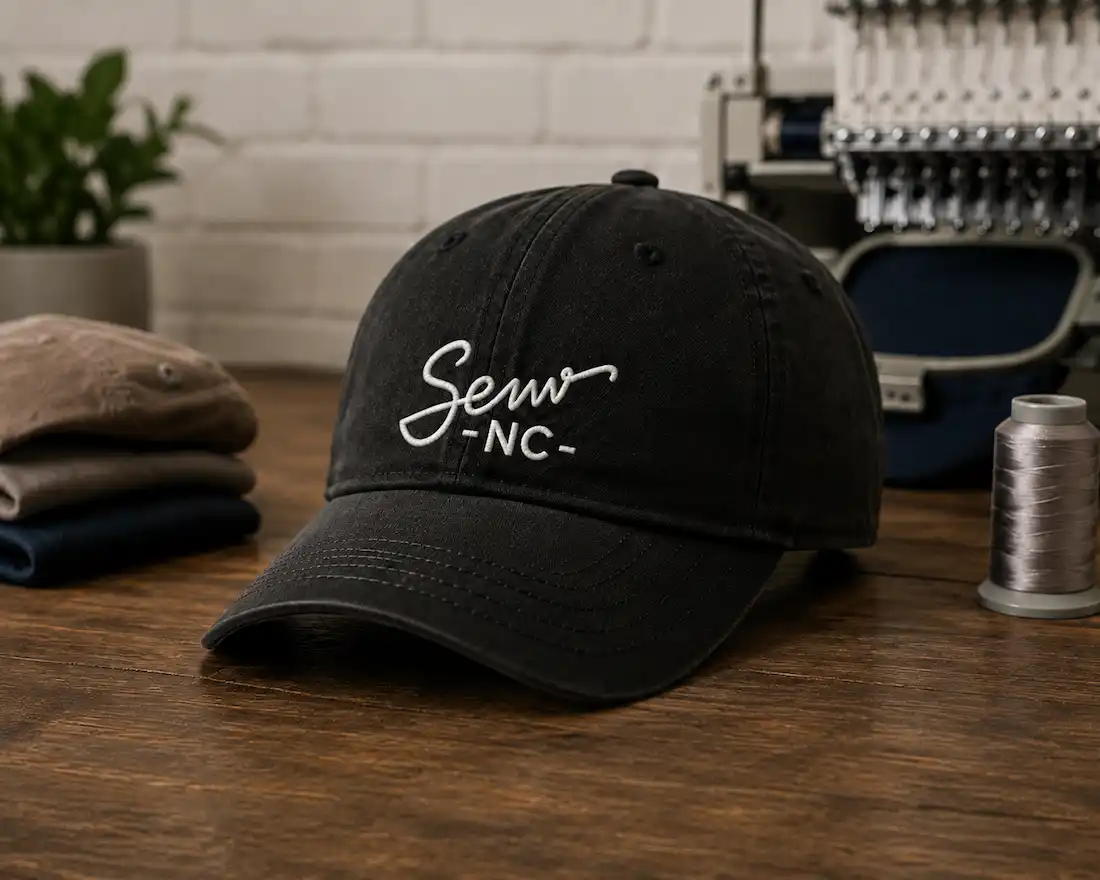
Printed logos on work uniforms tend to crack and fade faster than office apparel does, purely because of how often they get washed. Embroidery holds its shape through years of commercial laundering in a way that printing simply doesn’t, which is exactly why so many uniform programs default to stitched logos on anything worn daily.
Logo Placement That Reads as a Real Company
Placement decides whether a uniform looks intentional or slapped together, and it has almost nothing to do with the logo itself.
Left chest works across every garment type, from a polo to a heavy work jacket, and it stays legible even after the shirt’s been through a hundred washes. A larger back design works for some roles, especially anything customer-facing from behind, but it costs more and takes longer to produce, so it’s worth confirming the role calls for it.
- Default to a small, left-chest logo for daily uniform pieces
- Reserve larger back designs for roles where customers regularly see someone from behind
- Confirm the logo still reads clearly at uniform scale, not just on a full-size mockup
Sizing a Team Without the Endless Back-and-Forth
Uniform sizing goes wrong more often from guessing than from anything about the garment itself. A shirt sized off an old order, or based on what someone assumes a role needs, usually comes back wrong at least a third of the time.
Collect sizes directly from each employee before the order goes in, and keep that record on file for reorders. New hires and replacements come up constantly in a uniform program, and having sizes ready cuts weeks off every future order.
- Pull sizes from the actual team, not previous orders or estimates
- Keep a running size sheet on file so reorders skip the collection step entirely
- Order a couple of extra sizes in common ranges to cover new hires without a rush order
Budgeting and Reorder Cadence for a Program That Lasts
Cost conversations go smoother when they’re framed around cost per year worn instead of cost per shirt. A heavier, better-stitched garment costs more upfront but lasts through far more wash cycles than a cheaper option that needs replacing twice as often.
Embroidery adds cost per unit compared to screen printing, but it survives the wash cycles daily work uniforms go through, which makes it the better long-term choice for anything worn several times a week rather than at a single event.
- Budget for the pieces worn daily first, then fill in occasional layers
- Expect to reorder as new hires join, roughly every few months for an active team
- Keep the logo file and thread specs on hand so reorders move faster than the first order did
When Work Uniforms Get Ordered in a Rush
A few situations tend to push an order onto a tighter runway than anyone planned for. A new location opening puts a full order under real-time pressure, often with just a few weeks between signing the lease and opening the doors. Seasonal hiring adds headcount fast, especially for retail or food service businesses ramping up staff for summer or the holiday rush. A rebrand or new logo forces every existing piece into a reorder at once, whether or not the budget saw it coming.
- Grand openings: start the order six to eight weeks out, not two
- Seasonal hiring surges: keep a small buffer of common sizes on hand instead of ordering exact headcount
- Rebrands: budget a full uniform swap as its own line item, separate from routine reorders
- Sales kickoffs or company milestones: give a uniform refresh the same lead time as any other bulk order
Where Work Uniforms Go Wrong
Most programs run into the same handful of problems, and every one of them traces back to a decision made before the first order shipped.
- Ordering one garment style for every role instead of matching it to actual job demands
- Skipping a worn sample and finding out about fabric or fit issues after the full order arrives
- Choosing a logo too detailed to hold up cleanly at a small embroidered scale
- Guessing sizes instead of collecting them directly from the team
- Treating the uniform as a single purchase instead of an ongoing program with built-in reorders
A program that skips even one of these steps usually survives fine on the first order. The cracks tend to show up by the second or third, once new hires need sizes nobody collected and reorders take longer than anyone expected.
Whatever the role, front counter, shop floor, or a team split across both, the details above end up mattering more than which shirt got picked first. Sew NC works through fabric, fit, and logo placement before production starts on every set of work uniforms, so what shows up matches the team it needs to represent.
Build a work uniform order that fits your staff and daily tasks, and get a quote before locking in garments, sizes, or a deadline.