Corporate casuals live in an odd middle zone. Not a suit. Not a hoodie. The stuff people actually reach for without thinking twice, a polo before a client call, a quarter-zip pulled over a work shirt on a cold morning walk-through.
Every company eventually runs into the same wall. Someone in HR wants a dress code that photographs well. Someone in operations wants fabric that survives a real work week, not a runway. Nobody wants to look like they’re wearing a costume.
Here’s what this guide covers: the pieces worth building around, the fabric and fit decisions that decide whether people wear the stuff or bury it in a drawer, and the logo choices that separate “company apparel” from “uniform.”
We’ve walked through this exact conversation with businesses all over Winston-Salem and the Triad at Sew NC. Nine times out of ten, the company already owns half the right pieces. What’s missing is a plan.
What Corporate Casual Actually Means
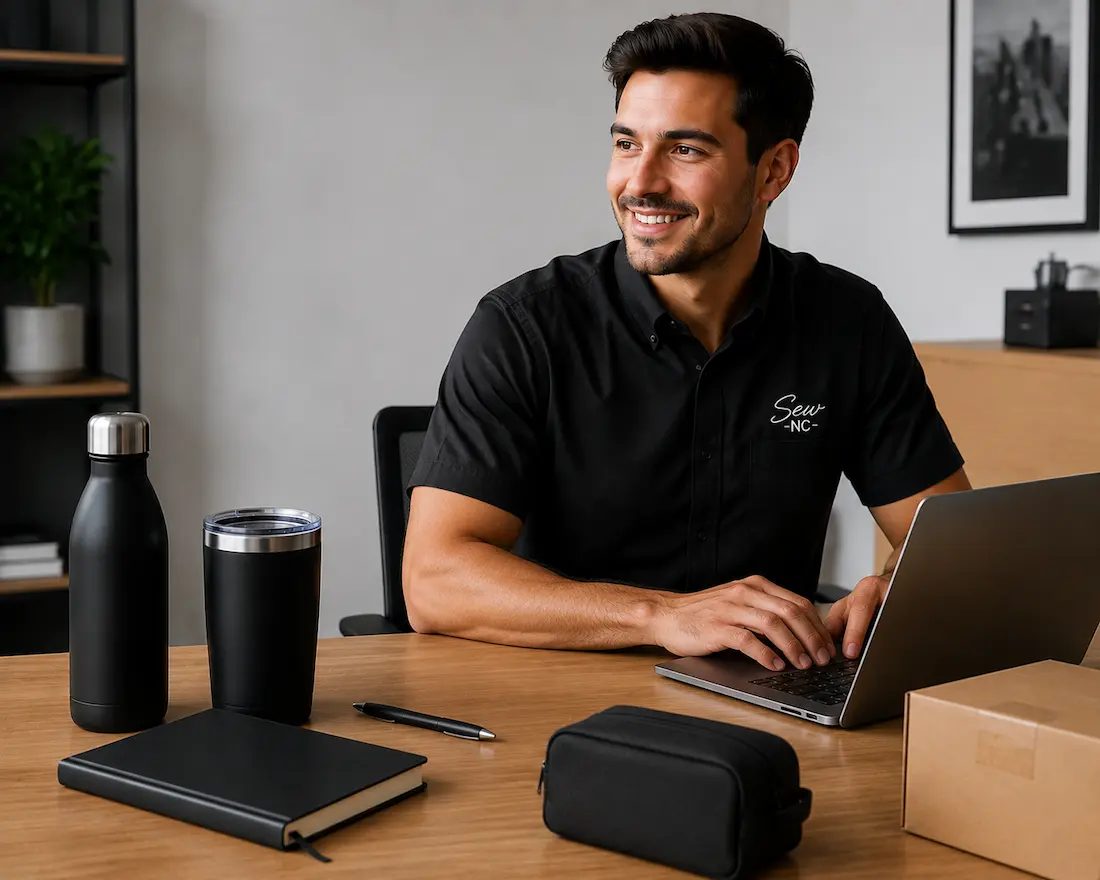
Forget the idea that corporate casual is one garment. It’s a lane between suit-and-tie and true weekend wear, built from pieces that look deliberate without a blazer anywhere in sight. A polo. A soft cardigan. A quarter-zip. A jacket light enough for a client walk-through but sharp enough for a photo.
Put a team in matching corporate casual pieces and something clicks. It reads as a company that has its act together, not a company forcing a costume. And unlike a pressed dress shirt, none of it needs an iron by Wednesday.
Most businesses in the Triad we talk to didn’t set out to build a corporate casual program on purpose. It grew out of one good polo order that people kept asking to reorder, then a matching layer, then a plan.
Building the Wardrobe: Core Pieces First
Skip the full catalog. Two or three pieces, done well, beat ten options nobody can agree on.
Polos and Knit Tops
Start here. A cotton blend polo covers most office teams fine. Anyone stepping outside for part of the day needs a performance polo instead, something that survives sweat and sun without pilling by August.
Quarter-Zips and Cardigans
This is the piece people fight over in a good way, because it works. A quarter-zip covers more ground than a full-zip hoodie ever will in a client-facing role, and people keep wearing it long after five o’clock, which tells you something about the fit.
Outerwear, Last
Jackets come last for a reason. Get the polo and the layer right first. A soft shell or light jacket rounds things out once a company knows its team moves between a desk, a vehicle, and a job site during the same shift.
- Two pieces before ten
- One core color, one accent, nothing else until reorders prove it out
- Outerwear only after the base is settled
A regional insurance agency in Winston-Salem built theirs backward from what we’d recommend and it still worked. One polo color, company-wide. A matching quarter-zip added for account managers meeting clients face to face. Outerwear didn’t show up until the following winter, once the first two pieces had already earned their keep.
Fabric and Fit for a Real Work Week
This is where good intentions die. A shirt that wrinkles after one wash gets worn once, then lives in a drawer next to gym clothes nobody uses either.
Stretch blends beat pure cotton here, every time. They hold shape, shrug off wrinkles without an iron, and photograph better in the kind of casual, modern cut that’s replaced the boxy corporate fit from a decade ago.
- Get a size run sample before committing to the whole team
- Match fabric weight to the actual climate, not the showroom
- Confirm true-to-size fit; brands vary more than people expect
Climate catches more programs than fit does. A midweight blend that’s perfect in an air-conditioned office turns miserable fast on a warehouse floor. A summer-weight knit that’s great for a client lunch won’t survive October. Test a sample where it’ll live before the full order ships.
Logo Placement That Reads as Company, Not Costume
A corporate casual piece should look like it belongs to a business, not a job you’re required to show up to. Placement and size decide that more than the garment itself.
Small, left chest, embroidered or heat-applied. That combination beats a giant front print nearly every time in a professional setting. Embroidery specifically holds up through years of washing in a way printed logos simply can’t; the stitching doesn’t peel, crack, or fade out after fifty trips through the laundry.
- Keep it small and left chest for daily wear
- Choose embroidery for anything that gets washed weekly
- Save the big, bold branding for event shirts, not everyday pieces
A logo that reads perfectly at two inches can turn into mud blown up across a full back panel. Ask to see both sizes mocked up side by side before signing off. It takes five minutes and saves a reprint.
Dressing a Team That Doesn’t Match
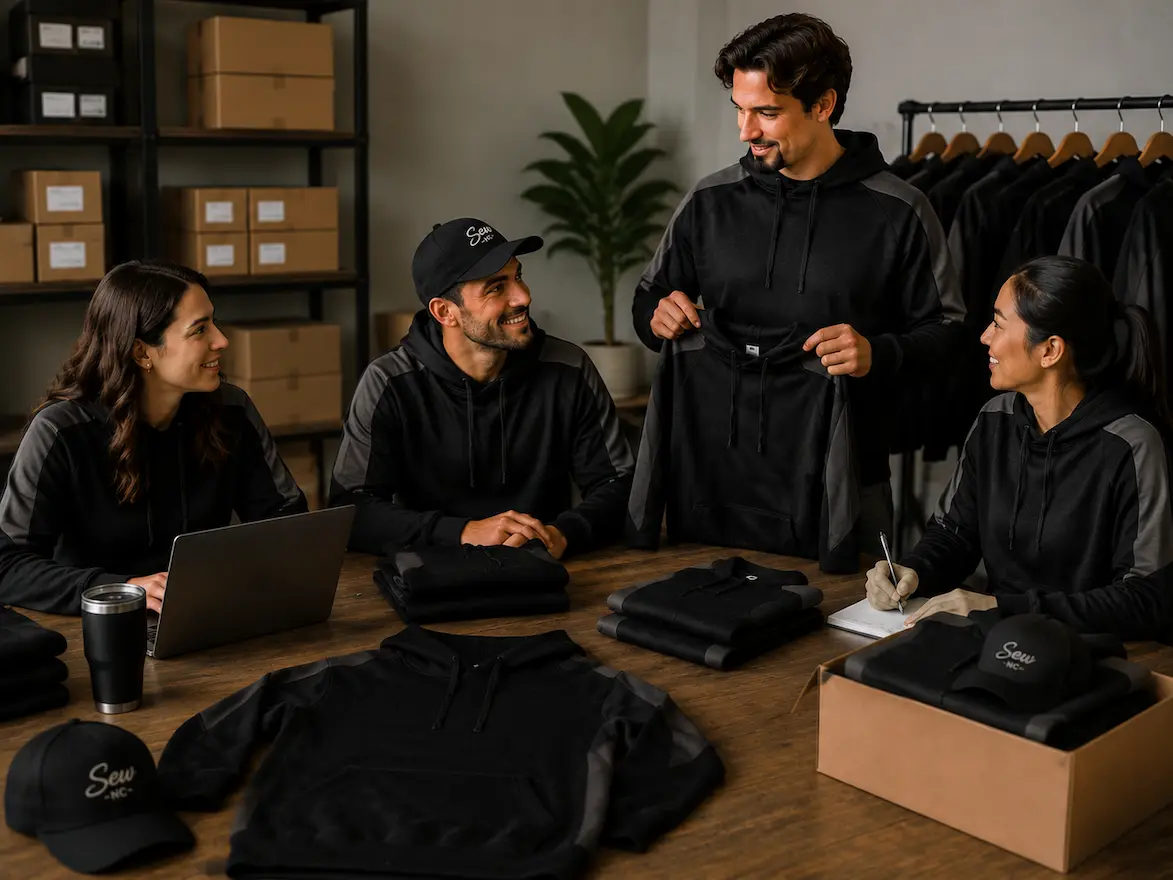
Almost nobody has one job title covering the whole staff, so one garment rarely covers everyone well either. A salesperson meeting clients needs something different from a warehouse crew, and both need something different from whoever’s answering the phones.
Office and client-facing folks do fine in polos, cardigans, light jackets. Field and warehouse crews need something heavier, a soft shell or fleece-lined piece, still matched to the same colors and logo as everyone else in the building.
- Match colors and logo across every role, even when the garment changes
- Order a heavier fabric option specifically for outdoor staff
- Pick one shared piece, a quarter-zip usually, that works for literally everyone
One property management company we work with keeps a single navy-and-gray palette company-wide, but swaps in a soft shell for maintenance crews while the leasing office wears the cardigan version of the same colors. Same brand, two completely different jobs.
Seasonal handoffs trip up a lot of programs too. A company that only plans for summer polos gets caught scrambling every October, ordering quarter-zips and jackets under deadline pressure instead of rotating them into a corporate casual program from the start.
The Trade Show Test
Trade show season exposes weak spots in a corporate casual lineup fast. A booth crew stands for eight hours under fluorescent lights, shakes a hundred hands, and still needs to look sharp in every photo a prospect snaps. That’s a different job than sitting at a desk in October.
A quarter-zip earns its keep here more than almost anywhere else on the floor. It layers over a booth shirt without looking bulky, hides travel wrinkles a dress shirt never could, and still reads clearly as company gear the second someone glances at the chest logo. Polos work too, but only if the fabric survives a full day of standing without going limp by mid-afternoon.
- Pack one extra layer per person for booth duty; convention centers run cold
- Choose a fabric that resists visible sweat marks under show lighting
- Confirm the logo photographs well under both daylight and indoor booth lighting before the show, not during it
What This Actually Costs
Budget conversations go better when they’re framed around cost per year worn, not cost per piece. Polos and knit tops sit cheapest. Quarter-zips and cardigans land in the middle. Structured jackets cost more up front and outlast almost everything else in the closet.
Embroidery costs more than screen printing on day one. It also survives roughly triple the wash cycles. Spend where people wear the thing most, the daily polo, the go-to quarter-zip, before spreading budget evenly across pieces that’ll see a fraction of the use.
- Put more budget behind the pieces people wear daily
- Expect embroidery to cost more per unit, and last far longer
- Keep a small reserve for reorders instead of ordering exact headcount
Where Programs Go Wrong
Most failures trace back to a handful of decisions, and every single one happens before the order ships.
- Picking style before fit, then fielding sizing complaints for a month
- Skipping the sample and guessing at fabric weight
- Choosing a logo too detailed for a small left-chest placement
- Ordering one style for every role instead of splitting office from field
- Treating this as a one-time purchase instead of an ongoing program
A corporate casual program that skips even one of these steps usually survives the first order fine. It’s the second and third order where the cracks show.
Rolling It Out Without Chaos
A short plan beats one giant order every time when a corporate casual rollout is new. Introduce a small core lineup, gather feedback for a few weeks, then expand from there.
Collect sizes directly from the team; don’t guess off shirt sizes people bought five years ago. Set a real date for when new apparel goes into rotation, and give people a heads-up before it shows up, so nobody walks in Monday confused about a new dress code nobody explained.
- Pull sizes straight from employees, not shirt-size guesses
- Approve a real proof before full production starts
- Build in a reorder cycle; new hires show up faster than programs expect
Plenty of HR teams fold this straight into onboarding. Grab a new hire’s size on day one, hand them a polo or quarter-zip within the same pay period, and apparel stops feeling like something that got forgotten for three months.
A corporate casual program works best as an ongoing relationship, not a single transaction. Sew NC handles proofing, sizing, and reorders for teams across the Triad long after that first order ships.
Build a corporate casual apparel mix that matches your team. Get a plan for sizing, fabric, and branding before you place the first order.