Bulk custom t shirts solve a specific kind of problem: fifty people who need to look like one team by Friday, or three hundred volunteers who all need the same shirt for a fundraiser walk this weekend. Nobody’s picking these for how they’ll photograph on a lookbook. They’re picking them because a room full of matching shirts does something a scattered crowd never can.
Most orders like this start with a deadline already attached, an event date, a start date for new hires, a fundraiser that’s been on the calendar for months. The part that trips people up isn’t the shirt itself. It’s the quantity breaks, the print setup, and the sizing that determines whether the order shows up ready to hand out.
This guide walks through picking the right shirt for staff versus events versus volunteers, how print method and color count change both cost and turnaround, and the sizing habits that keep a bulk order from turning into a scramble the week it’s due.
Sew NC runs bulk custom t shirts for businesses, schools, and nonprofits across Winston-Salem and the Triad every week, and the orders that go smoothly almost always start with a clear answer to one question: what is this shirt actually for.
What “Bulk” Actually Changes About a T-Shirt Order
Bulk custom t shirts aren’t just a bigger version of a small order. Price breaks kick in at specific quantities, print setup gets spread across more units, and decisions that barely matter at a dozen shirts, color count, print location, fabric weight, start affecting the total cost meaningfully once the order hits fifty, one hundred, or more.
That’s the real argument for planning before ordering instead of scaling up whatever felt right for a small batch. A one-color design on the front only costs less to print and ships faster than a full-color, multi-location design, and at real volume that difference adds up fast.
Most bulk custom t shirts see their first real price break somewhere between twenty-five and fifty units, with another step down around one hundred and again past two hundred and fifty. Ordering a few extra shirts to clear the next break can sometimes cost less overall than stopping just short of it.
Picking the Right Shirt for the Job
Not every bulk custom t shirt order needs the same shirt, and matching the garment to its actual use is where most planning conversations should start.
Staff and Onboarding Shirts
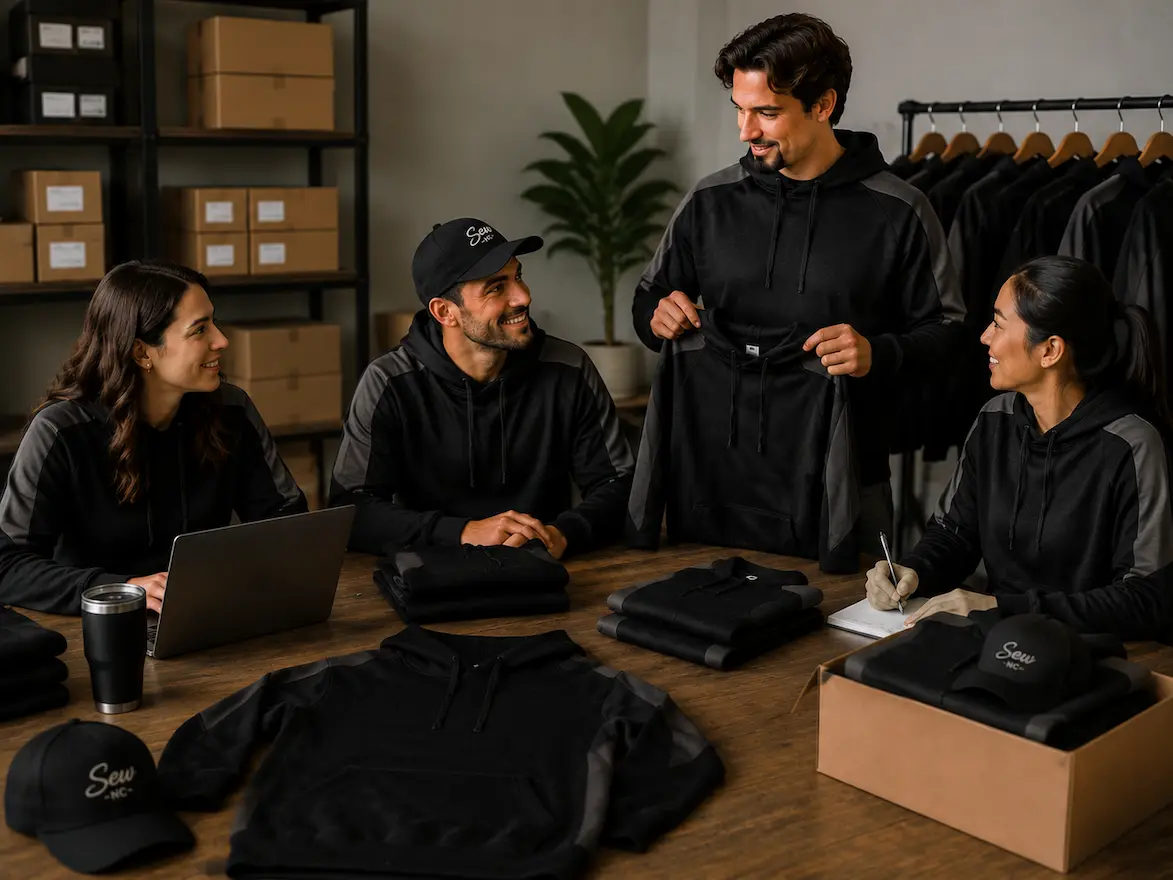
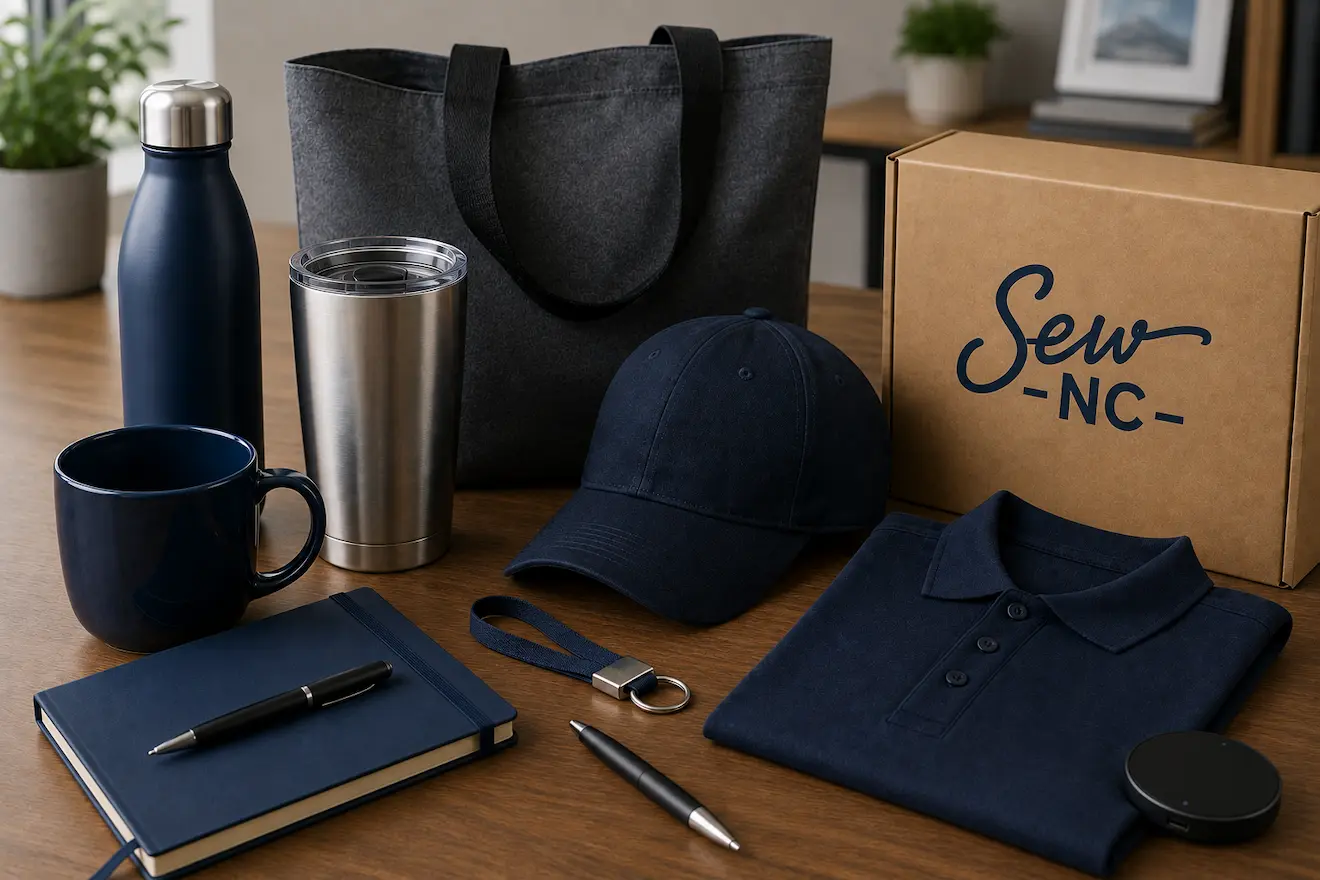
A shirt someone wears weekly needs to survive real washing, so a heavier ringspun cotton or a poly blend holds up better than the cheapest option on the list. Staff shirts also tend to need a fuller size range collected from actual employees instead of guessed from headcount. These often double as onboarding shirts too, handed to a new hire in the first week alongside the rest of a starter kit.
Event and Volunteer Shirts
A one-day event shirt has different priorities. It needs to look good in photos, layer easily over other clothes if the weather turns, and cost less per unit because it’s often given away instead of reordered. A lighter cotton blend covers this well without overspending on durability nobody needs past that one Saturday.
Fundraiser and Giveaway Shirts
Fundraiser shirts carry a bit more weight because they often get worn long after the event, sometimes for years. A slightly better fabric here pays off in visibility down the road. A shirt that falls apart after two washes stops representing the cause the moment it hits the donation bin.
- Match fabric weight to how often the shirt will actually get worn
- Reserve premium blends for staff and fundraiser shirts meant to last
- Keep event-day shirts simple and cost-effective, because most get worn just once
A local 5k charity run we work with orders the same way every year: a lighter tee for the several hundred runners, and a slightly heavier version in smaller numbers for the volunteers and staff who wear theirs well past race day.
Print Method and Design Choices That Affect Cost and Turnaround
Screen printing is the standard for bulk custom T-shirts, and for good reason: it holds up well, scales efficiently at volume, and gets more cost-effective per unit as quantity goes up, which is the opposite of how most specialty printing methods behave.
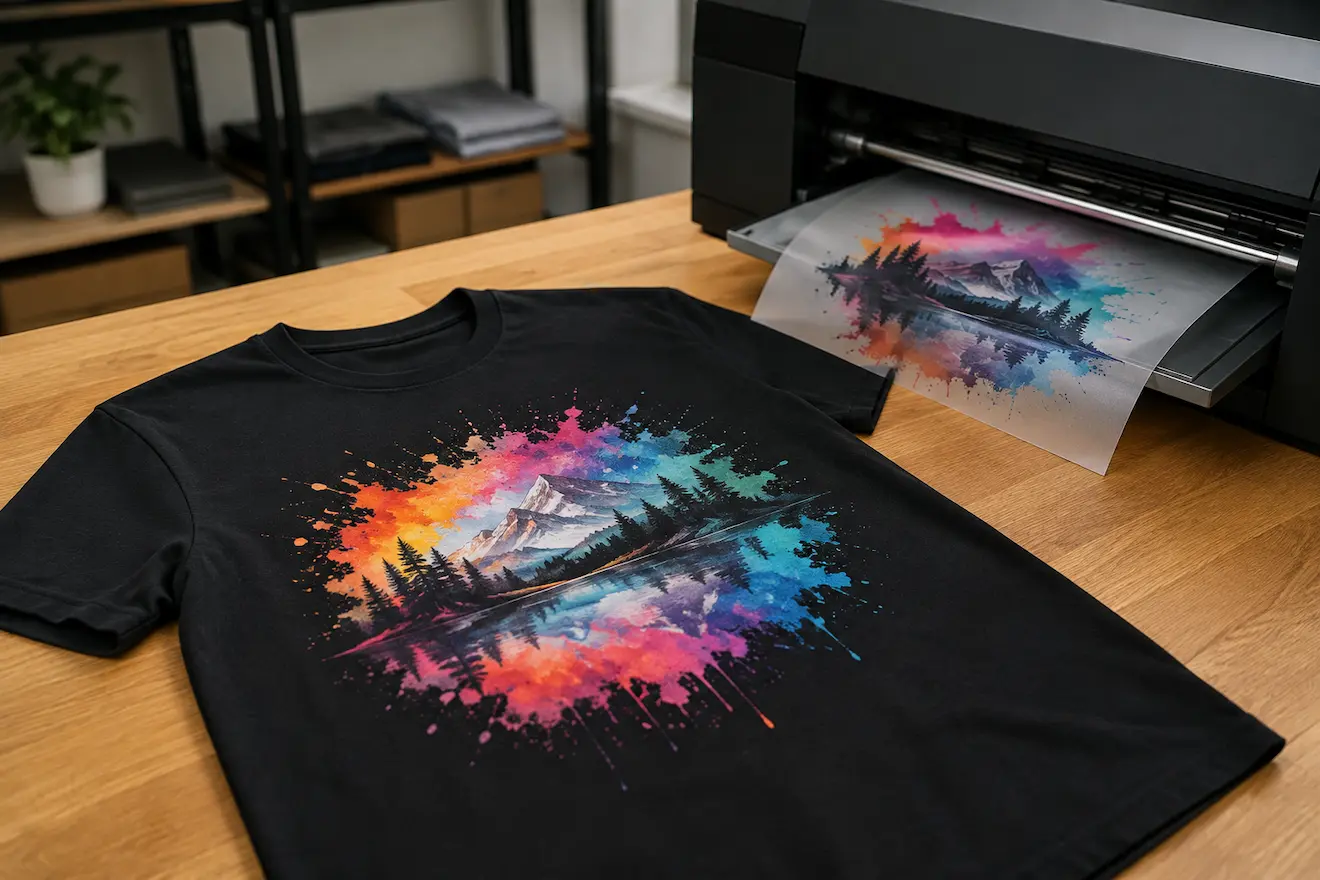
Color count matters more than most people expect going in. Each additional color in a design means another screen and another pass through production, so a two-color logo costs less and ships faster than a five-color design, even at the exact same quantity. Print location adds up the same way; a single front placement is the fastest and least expensive option, while adding a back print or a sleeve hit doubles the setup work.
- Keep color count to one or two whenever the design allows it
- Choose a single print location unless the design genuinely needs more
- Ask for a physical proof before production, not just a digital mockup
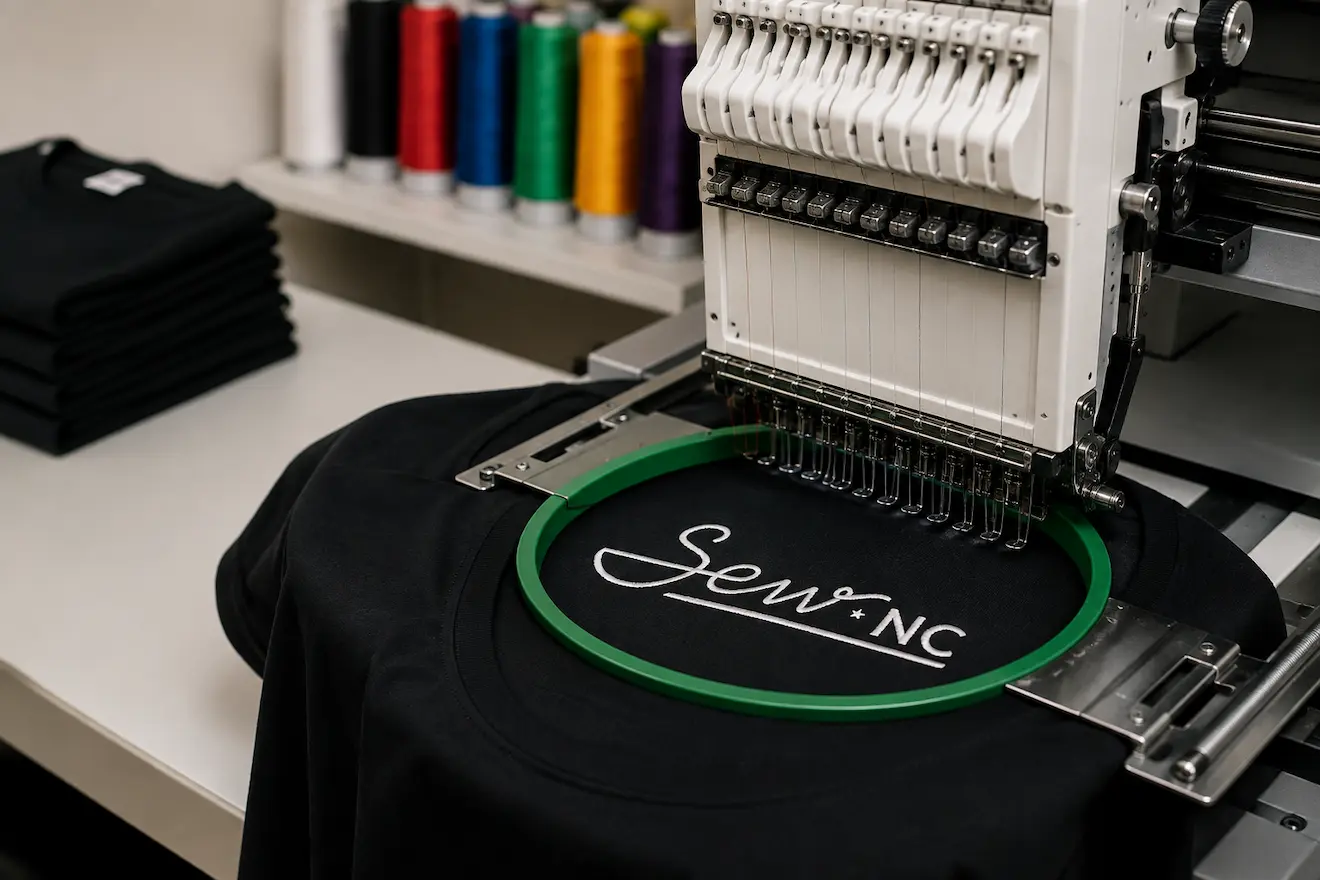
Sew NC handles screen printing for bulk custom t shirt orders of nearly any size, and simplifying the design early is usually the single biggest lever for keeping both cost and turnaround reasonable.
Sizing, Quantities, and the Reorder Problem
Sizing a large order off guesswork is the single most common reason a bulk order arrives wrong. A headcount estimate rarely matches an actual size breakdown, and running short on 2XL or overordering small mediums wastes both money and time right before an event.
Collect real sizes from the actual people wearing the shirts whenever possible, whether that’s staff, volunteers, or a registration list for an event. For public fundraisers where sizing individuals isn’t realistic, order based on typical distribution curves rather than splitting the total evenly across every size.
- Pull sizes directly from staff or registered volunteers when the list exists
- Order a slightly heavier concentration of mid-range sizes for public or unknown audiences
- Add a small buffer, five to ten percent, for damaged shirts or last-minute additions
How Fast Bulk Custom T Shirts Can Move
Timelines depend heavily on design complexity and quantity, but a straightforward one or two-color order doesn’t need to take weeks. Sew NC turns around standard tee orders placed by noon in just two business days, with Friday orders ready the following Tuesday, which matters a lot for anyone planning an event on a shorter runway than they’d like.
More complex designs, multiple print locations, or very large quantities add production time beyond that baseline, so it’s worth confirming turnaround against the actual order instead of assuming the fastest case applies automatically.
- Confirm turnaround based on the actual design and quantity, not a general estimate
- Build in a few extra days beyond the minimum for anything tied to a fixed event date
- Ask early if a rush option exists for orders placed closer to the deadline than planned
Budgeting for Bulk Custom T Shirts
Cost per shirt drops as quantity increases, but the curve isn’t perfectly smooth. Price breaks tend to cluster around round numbers, so an order of ninety-eight shirts often costs the same per unit as ordering a full hundred, worth knowing before finalizing a headcount.
Color count and print location affect the per-unit price more than most other variables, which is exactly why simplifying a design pays off at real volume in a way it barely does for a dozen shirts.
- Ask about quantity breaks before finalizing the count; rounding up sometimes costs less overall
- Keep the design simple to protect the per-unit price at scale
- Budget a small buffer for reorders rather than treating the first order as the only one
When Bulk T-Shirt Orders Tend to Spike
A handful of dates on the calendar drive most bulk custom t shirts orders, and planning around them beats scrambling once they arrive. Company picnics and summer outings push orders through in June and July, often with a headcount that changes right up until the week of the event. Back-to-school season brings a wave of orders for school groups, booster clubs, and youth programs, usually with less lead time than organizers expect once fall activities line up. Charity walks and 5k season cluster heavily in spring and fall, and fundraiser deadlines rarely move once a race date is set.
- Summer company events: lock in the design a month out; headcounts tend to shift closer to the date
- Back-to-school orders: submit artwork before the first week of August to avoid the seasonal rush
- Charity walks and 5k events: confirm turnaround against the race date, not the order date
- Holiday volunteer drives: order early in November before production calendars fill up for the season
Common Mistakes With Bulk Custom T Shirts
Most problems with a large t-shirt order trace back to a handful of decisions made before production even starts.
- Guessing sizes instead of collecting them from the actual group wearing the shirts
- Adding print locations or colors that inflate cost without much visual payoff
- Ordering the exact headcount with no buffer for damage or last-minute additions
- Skipping a physical proof and approving only a digital mockup
- Assuming the fastest possible turnaround applies without confirming it against the actual order
Getting these right early has less to do with the vendor and more to do with the questions asked before the design gets locked in. That’s usually the difference between a box of shirts that shows up ready to hand out and one that arrives short, wrong, or late.
Whether it’s a hundred staff shirts, a fundraiser walk, or a company event next month, the details above end up mattering more than the artwork itself. A little planning around sizing and print setup goes further than a bigger budget ever does. Sew NC handles proofing, sizing, and production timing on every order so what arrives matches what got approved.
Build a bulk t shirt order with sizes, colors, and deadlines, and get a quote from our team before locking anything in.